
Last updated October 16, 2026
 AC repair
 Furnace & heating
 Heat pumps
 Ductless mini splits
 Carrier
 Trane
Trane Goodman
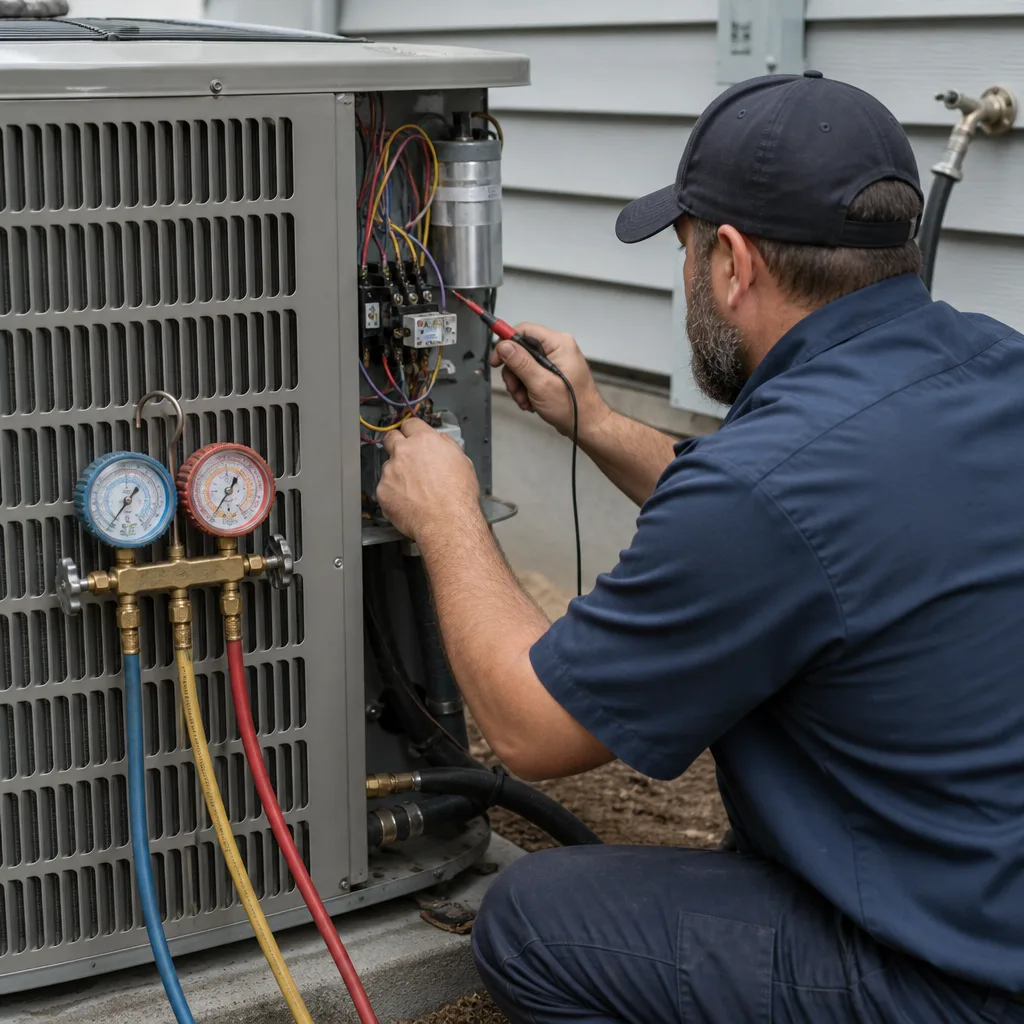
Seasonal tune-up and full diagnostic on your Carrier, Trane, or Goodman system - readings shown to you before any repair is proposed
Diagnosis first, numbers second - you approve the repair price before a single part goes in.
Get your free estimateAC Repair Maintenance Checklist for Alpharetta Homeowners
Alpharetta’s oak and pine pollen season deposits enough organic debris on condenser coils between March and May that a unit cleaned in October can be operating at reduced efficiency before Memorial Day. That single fact makes the standard “one checkup per year” advice actively misleading for this zip code. In this guide, we’ll walk through the exact maintenance calendar that matches how Alpharetta’s weather actually behaves, because catching two specific problems early costs less than $150 and prevents the majority of mid-summer breakdowns we see every year. For a broader look at system options, see The Complete Guide to HVAC in Alpharetta.
Quick Answer
An AC maintenance checklist for Alpharetta homeowners should follow a twice-yearly rhythm: a deep clean in late February or early March before pollen peaks, then a second inspection in September after summer’s heat load and afternoon storms. The two issues that cause most Alpharetta breakdowns are condensate drain clogs from spring pollen and refrigerant stress from wild temperature swings between cool April nights and 95°F June days. Both are preventable with a 10-minute drain check and a 20-minute coil cleaning, done on a schedule tuned to Alpharetta’s actual calendar rather than generic seasonal advice. If you’re weighing whether to tackle this yourself, our DIY vs Professional HVAC: The Alpharetta Homeowner’s Decision Guide breaks down when each approach makes sense.
Styles & brands we work with
Table of Contents
- Why Alpharetta’s Pollen Load Changes Your Maintenance Schedule
- Month-by-Month AC Maintenance Calendar for Alpharetta
- The 10-Minute Condensate Drain Check You Can Do Safely
- How to Listen to Your Outdoor Unit During a 90°F Day
- Filter Replacement Intervals for Alpharetta Homes With Pets and Renovation Dust
- What a Technician Should Hand You in Writing After a Maintenance Visit
- Should You Repair or Replace? A Realistic Alpharetta Answer
- Common Mistakes to Avoid
- When to Call a Professional
- Frequently Asked Questions
Why Alpharetta’s Pollen Load Changes Your Maintenance Schedule
Most national AC maintenance guides treat spring as one uniform season. Alpharetta doesn’t work that way. The city sits in a band of Georgia where loblolly pines, oaks, and hickory release pollen in overlapping waves from late February through mid-May, with peak concentrations often hitting between March 15 and April 20. That pollen doesn’t just make your car yellow. It coats the condenser coil on your outdoor unit, mixing with humidity to form a paste that reduces airflow across the coil. Reduced airflow means the system runs longer to hit the same indoor temperature, and longer run times in June and July are exactly what pushes aging compressors and capacitors past their limit.
We’ve opened outdoor units in Alpharetta neighborhoods like Windward and Crabapple in late May and found coil fins more than 40% blocked with pollen paste, pine needles, and cottonwood fibers. A unit that clogged isn’t “working harder” in some abstract sense. It’s moving less heat per minute, which means the refrigerant inside runs at higher pressure and higher temperature. That’s the mechanism behind most of the July breakdowns we see. The fix is straightforward: a coil cleaning in early March and a second one in early September, bracketing the worst of the pollen and the full summer run.
If you do nothing else from this guide, do this: clean or have your condenser coil cleaned twice a year, not once, and time those cleanings to Alpharetta’s actual pollen calendar rather than a generic spring and fall schedule. For homeowners near GA-400 or along Holcomb Bridge Road, add a third consideration: particulate matter from traffic settles on coils too, and it acts as a binder that makes pollen stick harder. Homes within a quarter mile of the highway corridor benefit from checking the coil every 90 days during pollen season.
This is also where AC Repair in Alpharetta calls start to outperform the national averages. A technician who knows Alpharetta’s specific pollen species and storm patterns can spot the early signs of a clogged drain or a stressed system a month before it becomes an emergency call. That’s the difference between a $125 maintenance visit and a $900 compressor repair.
Month-by-Month AC Maintenance Calendar for Alpharetta
Here’s the maintenance rhythm we recommend for Alpharetta homeowners. It’s built around the city’s actual weather patterns, not a generic spring-fall template. Each month includes what to do, why it matters in this specific climate, and roughly what it should cost if you do it yourself versus hiring a technician.
February: Pre-Pollen Deep Clean
What to do: Have the outdoor condenser coil cleaned, the indoor evaporator inspected, and the drain line cleared. Replace the air filter. Check refrigerant charge if the system is more than five years old.
Why February in Alpharetta: Pollen starts appearing on coils by late February in most years. Getting a clean coil before the pollen wave means the paste never forms in the first place. February temperatures in Alpharetta usually sit in the 50s and 60s, which is ideal for a technician to run a full diagnostic cycle without the heat load of summer skewing the readings.
Cost range: $120 to $220 for a professional maintenance visit, depending on whether refrigerant needs adjustment. Doing the coil rinse and filter swap yourself: $15 to $40.
March through April: Monitor During Peak Pollen
What to do: Check the outdoor unit visually every two weeks. Look for yellow-green buildup on the coil fins. Pour one cup of white vinegar down the condensate drain line once a month. Listen for changes in how the system starts up.
Why it matters: This is the single highest-risk window for drain clogs in Alpharetta. Pollen settles on the indoor coil too, not just the outdoor one. As the air conditioner runs, condensation washes that pollen into the drain line, where it mixes with dust and forms a sludge. Homes with dogs and cats add dander to that mix, which makes the sludge stickier. A drain that’s 80% blocked in late April becomes a full clog on the first 90°F day in June, when the system is producing maximum condensate.
Cost: Vinegar costs about $4. A wet-dry vac attachment to clear a slow drain costs $20 at any Alpharetta hardware store.
May: Pre-Heat Check Before the First 90°F Day
What to do: Run the system for 30 minutes on a warm afternoon. Measure the temperature difference between the return vent and the supply vent. A healthy system drops the air by 15 to 20 degrees. If you’re seeing less than 15 degrees, schedule a service call before the heat wave hits.
Why May in Alpharetta: The first 90°F day usually arrives in late May or early June. Technicians book out fast once that heat hits, and wait times for emergency service in Alpharetta can stretch to two or three days during a heat wave. Catching a low refrigerant charge or a weak capacitor in May means you’re not waiting in a hot house in June.
Cost: A temperature split check costs nothing. The thermometer is $10. If the split is low, a refrigerant top-off or capacitor replacement runs $150 to $400 depending on what’s found.
June through August: Monitor, Don’t Touch
What to do: Change the filter monthly if you have pets or live near GA-400. Keep the area around the outdoor unit clear of grass clippings and debris. Listen for any new sounds from the outdoor unit. Don’t attempt repairs during this window unless it’s an emergency.
Why it matters: This is the failure season in Alpharetta. Afternoon thunderstorms from June through August dump humidity into the system, and the condensate drain works harder than at any other time of year. Grass from weekly mowing gets blown against the condenser coil, blocking airflow. A lawn crew that doesn’t know better can bend coil fins with a string trimmer. The best maintenance during this window is passive: filter changes and observation. If something sounds wrong, call before it becomes a full failure.
Cost: Filters run $8 to $25 each depending on MERV rating. A service call for a strange sound costs $75 to $150, and most are resolved within the hour if caught early.
September: Post-Summer Recovery and Storm Damage Assessment
What to do: Have the system inspected after the last big heat week. Check for hail damage to the condenser fins, debris from summer storms, and signs that the system ran at its limits. Clean the coil again. Check the condensate drain for the algae and sludge that built up during peak humidity season.
Why September in Alpharetta: The system just spent four months running near maximum capacity. Capacitors fade, fan motors wear, and the coil picks up everything that summer storms threw at it. A September inspection catches these issues while the weather is still mild enough to schedule repairs on your timeline, not an emergency basis. It’s also the right time to evaluate whether the system is sized correctly for your home’s actual cooling load, based on real summer performance data.
Cost: $120 to $220 for a professional post-summer inspection. Minor repairs found during the inspection usually run $100 to $350.
October: Prepare for the Heating Switchover
What to do: Test the system in heating mode before you need it. Replace the filter. Check that the thermostat is set correctly for the season. Schedule any deferred repairs before the first cold snap.
Why October in Alpharetta: Alpharetta’s first hard freeze usually arrives in November, but the first cool day that makes you want heat can come as early as mid-October. Testing the furnace or heat pump now avoids the awkward first cold morning when the system won’t start and you’re competing with every other homeowner for emergency service. This is also the right time to handle Furnace Repair in Alpharetta before the winter rush begins.
Cost: A heating test costs nothing. If the furnace needs repair, fall rates run $100 to $500 depending on the issue.
November through January: Monitor Heating and Indoor Air
What to do: Change filters every 60 to 90 days depending on indoor air quality concerns. Watch for unusual furnace smells or sounds. Check that vents in every room are open and unblocked, especially in guest rooms and basements that may have been closed up during the cooling season.
Why it matters in Alpharetta: Winter is when houses in Alpharetta seal up tight against the cold, and that means whatever is in your ductwork stays in your air. Pets shedding winter coats, dust from holiday decorations, and the general indoor concentration of a Georgia winter all put more load on your filter. If you run a heat pump, the outdoor unit works in reverse during winter and needs to stay clear of leaves and debris even in January.
Cost: Filters remain $8 to $25 each. A seasonal heating inspection runs $100 to $180.
The 10-Minute Condensate Drain Check You Can Do Safely
The condensate drain is the single most common source of preventable AC failures in Alpharetta. Here’s what’s happening: your air conditioner pulls humidity out of the air as it cools. That water has to go somewhere. It drains through a PVC pipe, usually into a floor drain, a laundry sink, or outside near the foundation. When that pipe clogs, the water backs up into the air handler, and the float switch (if you have one) shuts the system down. If you don’t have a float switch, the water overflows and soaks whatever is beneath the unit.
The specific problem in Alpharetta is that our pollen and humidity combine to create a biological sludge inside drain lines. Pollen provides the organic material, humidity provides the moisture, and the dark, warm environment of a drain line is perfect for algae and bacteria growth. Homes near Lake Lanier or in heavily wooded parts of Alpharetta like the area around Wills Park see this problem faster than homes in newer developments with less mature tree cover.
Step-by-Step Condensate Drain Check
- Locate the indoor air handler. In most Alpharetta homes, it’s in the attic, a closet, or the garage. Look for a white PVC pipe coming out of the unit, usually 3/4 inch in diameter.
- Find the drain line exit point. This is where the pipe exits the house, usually near the foundation on the same wall as the air handler. You may see a small stub of PVC pipe with water dripping during cooling season.
- Look for standing water. Check the area around the air handler for water stains, a musty smell at the vents, or dampness on the floor or ceiling beneath the unit. Any of these means a clog is forming or already present.
- Sniff the return vent. If you notice a damp, earthy smell coming from the vents when the AC runs, that’s the smell of organic material in the drain line or the drain pan. It’s the earliest warning sign you’ll get, and most people ignore it because it’s subtle.
- Pour one cup of white vinegar down the drain line access point. Most drain lines have a T-shaped PVC fitting with an open cap near the air handler. Pour the vinegar in slowly. This kills algae and bacteria without the harsh chemicals you don’t want near your indoor air. Do this monthly during cooling season.
- Check the drip outside. On a humid day when the AC has been running for at least 20 minutes, go outside and see if water is dripping from the drain line exit. No drip on a hot, humid day means the water is going somewhere else, and that somewhere else is usually inside your house.
This whole process takes about 10 minutes once you know where everything is. The vinegar costs about $4 at any Alpharetta grocery store. Compare that to the cost of a clogged drain during a July heat wave: water damage to drywall, a flooded air handler platform, and an emergency service call that can run $300 to $600 just to clear the line, plus whatever the water damage ends up costing. This is the highest-return 10 minutes you can spend on your AC system.
How to Listen to Your Outdoor Unit During a 90°F Day
Your outdoor condenser unit makes predictable sounds when it’s healthy. Learning what “normal” sounds like on your specific unit is the cheapest diagnostic tool you own, and it’s especially important during Alpharetta’s 90°F days when the system is under maximum load. Here’s what to listen for.
Normal Sounds
A healthy, properly functioning condenser makes a steady hum from the fan motor and a subtle, rhythmic change in pitch from the compressor as it cycles through its cooling stages. On a Rheem or Daikin unit with a two-stage compressor, you’ll hear it shift from low stage to high stage as the afternoon heat peaks. That shift is normal and actually a good sign. You should hear the fan pushing air consistently, with no rattling, grinding, or intermittent stops. The sound should be smooth, like a well-running car engine.
Warning Signs That Say “Call Before It Fails”
- Clicking that repeats every few minutes: On a 95°F afternoon, this usually means a failing capacitor or a compressor that’s struggling to start. A capacitor is a $30 part and a $150 service call. A failed compressor is a $2,000+ replacement. Clicking is the early warning system.
- Hissing or bubbling: This is refrigerant escaping or moving through the lines in a way it shouldn’t. Early refrigerant loss, which happens more in Alpharetta because of the temperature swings between April nights and June days, sounds like a soft hiss or a gurgle. Catching low refrigerant at this stage costs $150 to $400. Ignoring it until the system stops cooling can cost $800 to $1,500 or more.
- A grinding or metallic squeal: That’s the fan motor bearings failing. The fan can seize, and then the compressor overheats and shuts down. A fan motor replacement runs $250 to $500. A seized fan that’s ignored can damage the compressor.
- Loud buzzing with no fan movement: The fan motor may have failed entirely, or the capacitor that starts the fan is dead. This is a same-day repair, not a next-week repair. When the fan isn’t moving, the coil can’t shed heat, and the system is running at dangerous pressures.
What We Look For on a Service Call
When we’re out on AC Repair services in Alpharetta during a heat wave, the first thing we do after walking up to the unit is listen. Not because we need to look impressive, but because the sound tells us what we’re dealing with before we even open the cabinet. A York unit with a failing capacitor sounds different from a Bryant unit with low refrigerant. Pairing that sound with the homeowner’s description of when it started, and what time of day it happens, narrows the diagnosis dramatically. If you’ve been tracking what your unit sounds like over a few weeks, that information makes our job faster and your bill lower. It’s the difference between a $150 repair and a $900 one, and it’s information only you have.
When the system is new and you’re weighing AC Installation in Alpharetta, consider brands with quieter, multi-stage compressors if noise has been an issue on your current unit. Homes with outdoor living spaces near the condenser, common in Alpharetta’s newer developments with smaller lots, benefit especially from the lower sound profile of modern multi-stage systems.
Filter Replacement Intervals for Alpharetta Homes With Pets and Renovation Dust
The standard advice is “change your filter every 90 days.” That advice is wrong for about half the homes in Alpharetta. The correct interval depends on what’s actually floating around in your house, and three factors specific to this area change the math significantly.
Factor One: Pets
If you have one dog or cat, change the filter every 60 days. Two or more pets, or one long-haired pet, every 30 to 45 days. Pet dander is finer than most people realize, and it combines with Georgia’s humidity to create a coating on the filter that reduces airflow much faster than dust alone. A filter that looks “not that dirty” on the surface can be clogged with dander throughout its depth. If you’re running a filter with a MERV rating higher than 8, clogging happens even faster because those finer pleats trap more particles.
Factor Two: Renovation Dust
Alpharetta has active renovation activity in neighborhoods like Country Club of the South and Windward, where homes from the 1990s and early 2000s are being updated. If you’re doing drywall work, sanding floors, painting, or any project that produces fine dust, change the filter every two weeks during the project and for the first month after. Drywall dust in particular is lethal to HVAC systems. It coats the indoor coil, reduces airflow, and combines with condensation to form a cement-like layer on the coil fins. A $25 filter is an insurance policy against a $400 coil cleaning.
Factor Three: GA-400 Proximity
Homes within a quarter mile of GA-400, Holcomb Bridge Road, or other busy Alpharetta corridors collect particulate matter from vehicle emissions and tire wear. That particulate is fine, sticky, and tends to darken filters much faster than the same filter in a home off a quiet cul-de-sac. If you live near a major road, check your filter every 30 days regardless of the other factors, and change it when you can no longer see light through it or when it’s visibly gray rather than white.
Quick Filter Reference for Alpharetta Homes
- No pets, no renovation, off the main roads: Every 90 days
- One pet or recent renovation within the last six months: Every 60 days
- Multiple pets, long-haired pets, or within a quarter mile of GA-400: Every 30 days
- Active renovation with drywall or floor sanding: Every 14 days until the dust settles, then every 30 days for the next two months
- Family members with allergies or asthma: Every 30 days with a filter rated MERV 11 to 13
The filter itself costs between $8 and $30 depending on size and MERV rating. For most Alpharetta homes, a MERV 8 to 11 filter strikes the right balance between air cleaning and airflow. Higher MERV ratings mean more filtration but also more resistance, which makes the blower work harder and reduces efficiency. If someone in the house has serious allergies or a respiratory condition, a MERV 13 is worth the efficiency trade-off, but pair it with more frequent changes.
What a Technician Should Hand You in Writing After a Maintenance Visit
After a professional maintenance visit in Alpharetta, you should leave with more than a receipt. A complete visit includes documentation, and there are three specific line items whose absence means the visit was incomplete. Here’s what to look for, and what each item tells you.
The Written Checklist
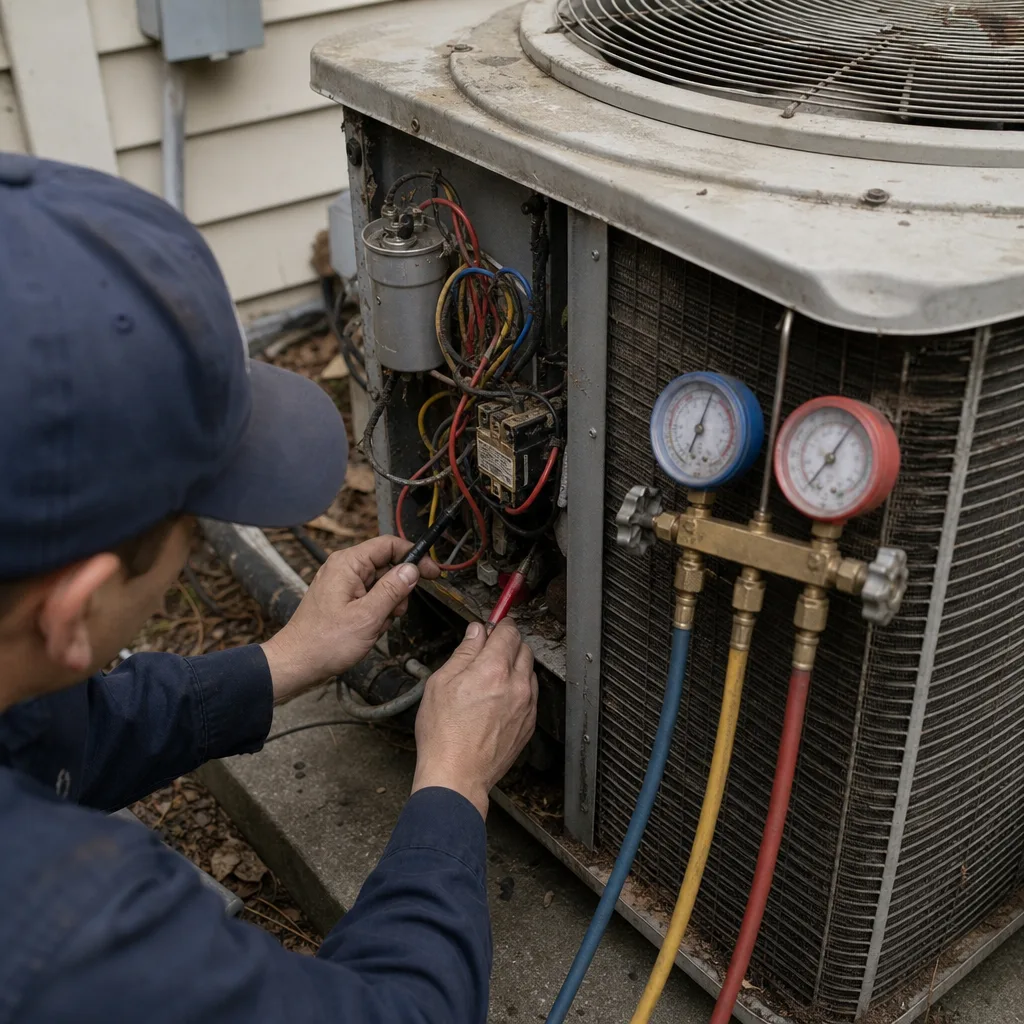
Every professional maintenance visit should include a checklist of what was inspected, what was cleaned, and what was found. This should list the coil condition before and after cleaning, the refrigerant pressure readings, the temperature split between supply and return air, the capacitor’s measured microfarad rating, and the drain line condition. If the technician doesn’t hand you a checklist, ask for one. If they can’t provide it, that’s a red flag that the visit was just a filter change and a visual glance.
At Meadowsweet Heating and Air Alpharetta home visits, every maintenance appointment includes a written report with actual numbers, not just checkmarks. A capacitor that reads 35 microfarads on a 40 microfarad rating is about to fail, and you should know that before it strands you on a 95°F day. A temperature split of 14 degrees when it should be 18 is a warning sign, not a passing grade. You paid for the visit. The numbers are yours.
The Three Line Items That Must Be Present
- Refrigerant pressure readings on both the high and low sides. If the report only says “refrigerant checked” without numbers, the technician didn’t actually know what they were checking for. Refrigerant doesn’t get consumed. A low reading means there’s a leak, and the leak needs to be found and sealed before the system is topped off.
- Capacitor and contactor measurements. These are the two electrical components that fail most often in Alpharetta’s heat. A competent tech measures both and writes down the numbers. If your capacitor is at 80% of its rated capacity or lower, schedule replacement on your terms, because it’s statistically likely to fail within the next 30 to 60 days of heavy use.
- A specific statement about drain line condition. Not just “drain checked.” You want to know whether the tech flushed the line, what came out of it, and whether the float switch (if present) was tested. In Alpharetta, this specific line item matters more than in most markets because of the pollen-driven clog rate. A tech who writes “drain clear” but can’t tell you if they flushed it with water or vinegar may have just glanced at the drip outside.
What to Do With the Report
Keep it. File it with your home maintenance records. The next time you need service, that report becomes your baseline. If a different technician says your refrigerant is low, the previous report tells you whether that’s a new development or a chronic issue. If the capacitor has been declining over three visits, you can replace it proactively. These reports are the difference between feeling like you’re guessing about your HVAC system and actually knowing its condition. For more guides & resources on maintaining your system, explore our blog. And in Alpharetta’s climate, where the system works hard for six months straight, that knowledge translates directly into dollars saved.
Should You Repair or Replace? A Realistic Alpharetta Answer
Every homeowner faces this question eventually, usually at the worst possible moment: it’s July, the system is dead, and someone has to decide whether to spend $800 on a repair or $7,000 on a replacement. Here’s the real math, specific to Alpharetta’s market and climate.
The rule of thumb most HVAC companies use is the “$5,000 rule”: multiply the age of the system by the cost of the repair, and if the result exceeds $5,000, replace. That’s a helpful starting point, but it misses Alpharetta-specific factors. The first is our cooling season. An AC system in Alpharetta runs hard for six months of the year. A 12-year-old system here has roughly the same operating hours as a 15-year-old system in a milder climate. That means replacement math tips toward replacement sooner here than in, say, Chicago.
The second factor is refrigerant. If your system runs on R-22 (Freon), which is standard in systems installed before 2010, replacing a refrigerant leak is a losing proposition. R-22 production ended in 2020, and the remaining inventory gets more expensive every year. A full R-22 recharge in Alpharetta can run $600 to $1,200 depending on how much is needed, and you’re buying a limited resource for a system that’s already past its design life. At that point, even a $7,000 replacement makes more financial sense than pouring money into a dying system.
The third factor is efficiency. A new system with a higher SEER2 rating will reduce your cooling bills in Alpharetta’s long, hot summers. A system installed in 2005 with a SEER rating of 10, replaced by a modern 16 SEER2 system, will use about 35% less electricity for the same cooling. In July and August, when Alpharetta electric bills spike, that’s real money back in your pocket every month. We cover this in more depth in our guide to AC Installation in Alpharetta, but the short version is: if you’re repairing a pre-2010 system, you’re not saving money, you’re just spreading out the cost of a replacement you’ll inevitably need.
Common Mistakes to Avoid
- Closing too many vents in unused rooms. Your system’s blower is sized for a specific air volume. Closing more than 20% of your vents increases static pressure, which strains the blower motor and reduces overall efficiency. In Alpharetta’s humidity, reduced airflow also means the coil gets colder than designed, which can cause it to freeze on the hottest days. Open the vents and let the system do its job.
- Setting the thermostat dramatically lower to “cool faster.” Setting it to 68°F when it’s 95°F outside doesn’t make the system cool any faster. It just makes it run longer, which means more electricity, more wear, and more condensate running through the drain line. Set it to your actual comfort target and leave it.
- Skipping the vinegar treatment because “the drain looks fine.” By the time you can see a problem, the clog is already forming. The vinegar is preventative. It costs $4 and takes 30 seconds. Skipping it because nothing is wrong yet is how every Alpharetta drain clog starts.
- Hiding the outdoor unit with landscaping “for curb appeal.” Bushes, fences, and latticework around the condenser restrict airflow just like a clogged coil does. The unit needs at least two feet of clear space on all sides and four to five feet above. If you’re landscaping around it, leave a wide berth. The unit doesn’t care how it looks. It cares how it breathes.
- Replacing the filter without checking the size. A filter that’s too small lets unfiltered air bypass it entirely, which means you’re spending money on filtration you’re not getting, and your coil is collecting all the dust the filter should have caught. Check the actual dimensions printed on the filter frame, not just the nominal size.
- Ignoring the musty smell at the vents. That smell is the earliest warning sign of a drain line problem. It means organic material is accumulating somewhere in the system, and it will eventually clog the line, freeze the coil, or both. The smell is not normal. It’s a signal.
- Trying to clean the outdoor coil with a pressure washer. High-pressure water bends the aluminum fins and drives the debris deeper into the coil instead of removing it. Use a garden hose at moderate pressure, or better yet, have a professional do it with the right coil cleaner and technique. A bent coil reduces efficiency by more than the dirt did.
When to Call a Professional
Most of the maintenance in this guide is safe for a homeowner to do: filter changes, vinegar drain treatments, visual inspections, and listening for sounds. But some situations need a trained hand. Call a professional if you notice refrigerant hissing or bubbling, if the outdoor unit is making grinding or clicking sounds, if the breaker for the AC keeps tripping, if water is pooling around the indoor unit, or if the temperature split between the return and supply air is less than 15 degrees. Any of these means something is failing, and the longer it runs, the more expensive the repair becomes. Also call if the system is more than 10 years old and you haven’t had a professional inspection in the last 24 months, and get a baseline before the next season starts.
We understand something else too: this is your home, not a service bay. Meadowsweet Heating and Air Alpharetta offers free estimates in Alpharetta, and every visit includes a written price before any work begins. Call (478) 606-5046 and we’ll give you a straight answer about what’s going on and what it will cost.
Frequently Asked Questions
Twice a year: once in late February or early March before Alpharetta’s pollen peak, and once in September after the summer heat load. Homes near GA-400 or with multiple pets may benefit from a third check in mid-July for filter and drain inspection.
A professional maintenance visit in Alpharetta typically runs $120 to $220 depending on the scope and whether refrigerant needs adjustment. A DIY maintenance routine with filters, vinegar, and coil rinsing costs $40 to $80 per year in materials.
The earliest signs are a musty smell at the vents and water stains near the air handler. Later signs include water dripping from the unit, a shut-down system from a tripped float switch, and visible standing water around the indoor unit. In Alpharetta, the musty smell usually appears in late spring when pollen and humidity combine.
You can rinse the outside of the coil with a garden hose at moderate pressure to remove pollen and grass clippings. Do not use a pressure washer, which bends the fins. For a deep clean that removes the pollen paste inside the coil fins, call a professional who has the right coil cleaner and can open the unit safely.
Given Alpharetta’s six-month cooling season and high humidity, a well-maintained system typically lasts 12 to 15 years. Systems that receive only occasional maintenance often fail by year 10. The most common cause of premature death in this area is a slow refrigerant leak that’s ignored until the compressor burns out, or repeated overheating from clogged coils.
The 365-Day Done Right Promise means that if a repair or installation isn’t done right, we make it right, with no runarounds and no fine print. It’s a guarantee that stands behind every job, not just the labor but the quality of how the work was done and how the home was left after. Call (478) 606-5046 for details on your specific system.
Yes. Alpharetta homeowners can often access rebates from Georgia Power and federal tax credits for high-efficiency systems. The exact amounts change by year and by the SEER2 rating of the system you choose. We handle the rebate paperwork and apply it to your estimate directly before you commit, not after.
The Bottom Line
Alpharetta’s climate treats AC systems harder than most: six months of cooling load, pollen that clogs drains and coils, and humidity that never really lets up. The maintenance schedule that works here is built around those realities, not generic seasonal advice. Clean the coil before pollen season and again before winter. Treat the drain with vinegar monthly. Change filters based on your pets, renovation dust, and proximity to GA-400. Listen to the outdoor unit on hot days. Keep the written reports from every service visit. And when something’s beyond the scope of home maintenance, call (478) 606-5046 for a straight answer and an honest price before the system fails on the hottest day of the year.
Written by Luis Serrano, Owner at Meadowsweet Heating and Air Alpharetta, serving Alpharetta since 2004.
See the difference
 Before
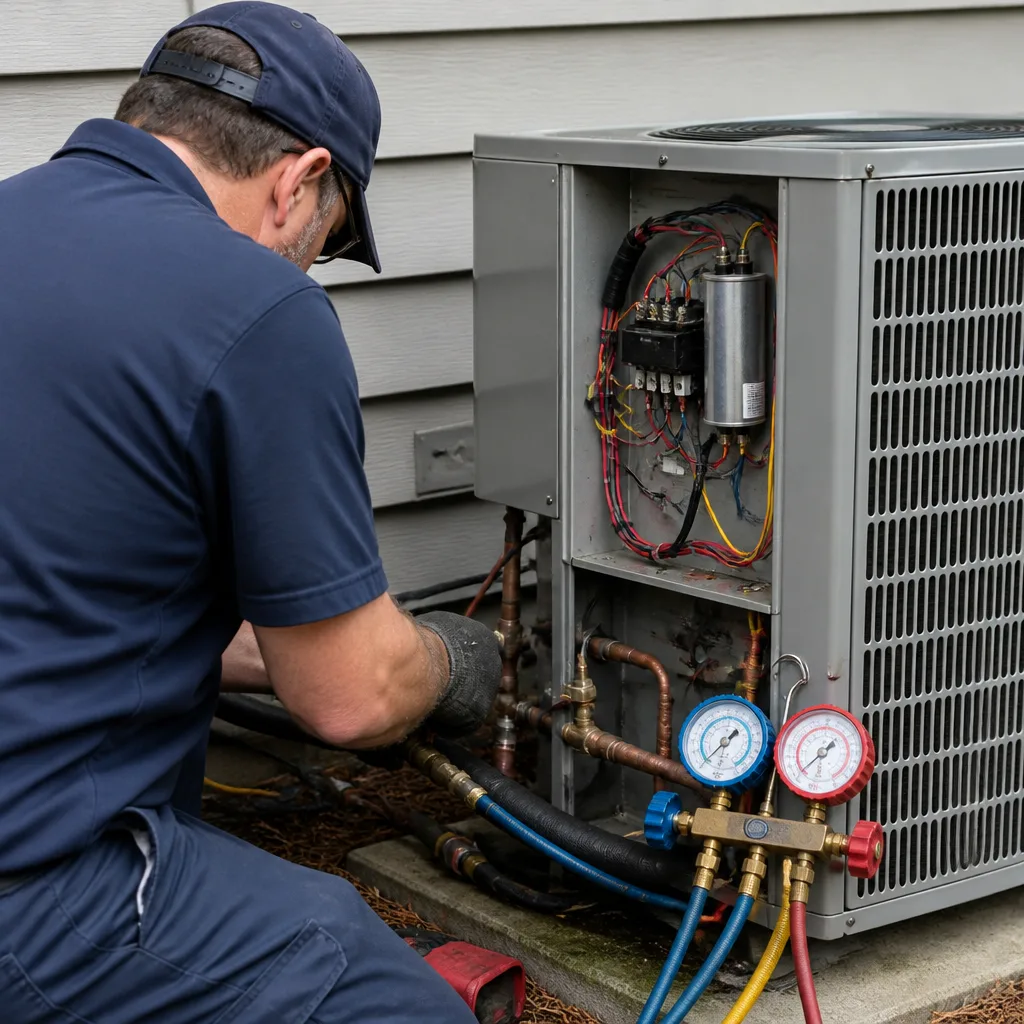 After
After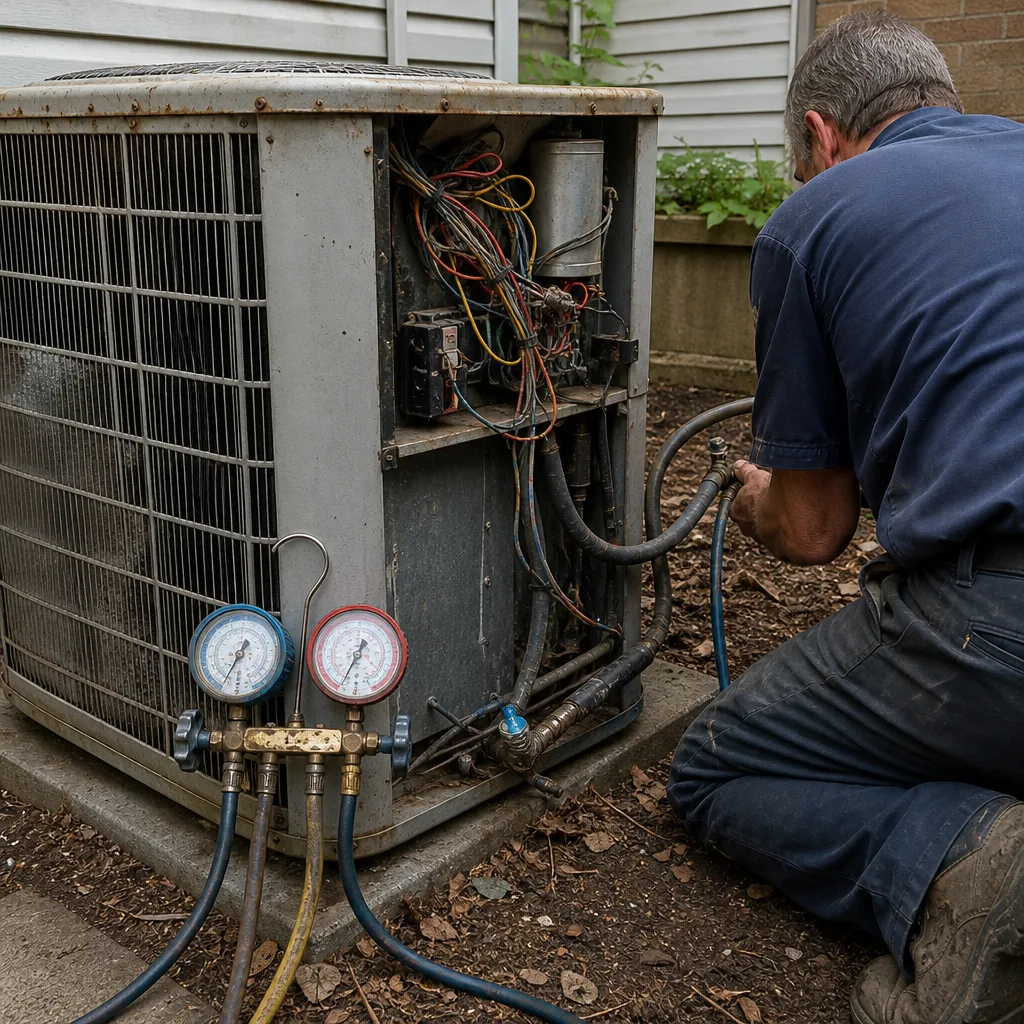 Before
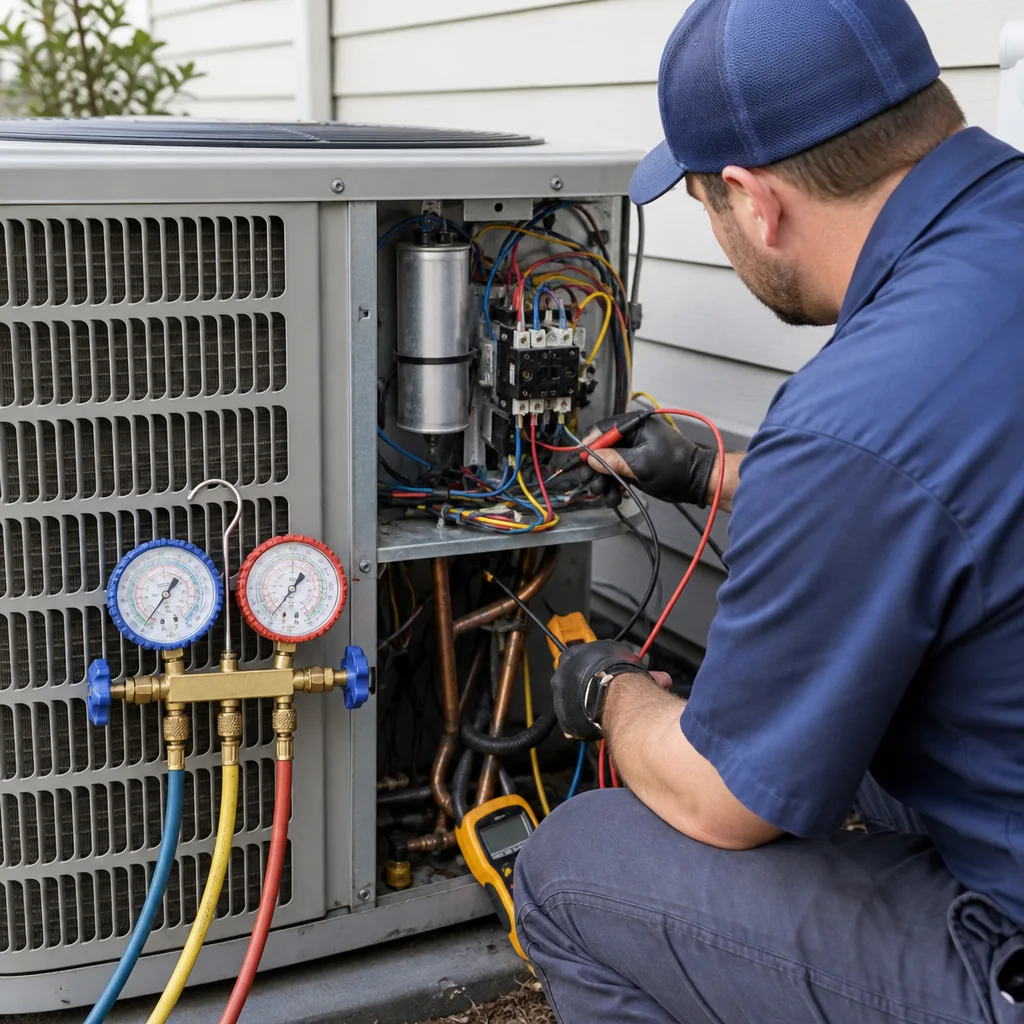 After
After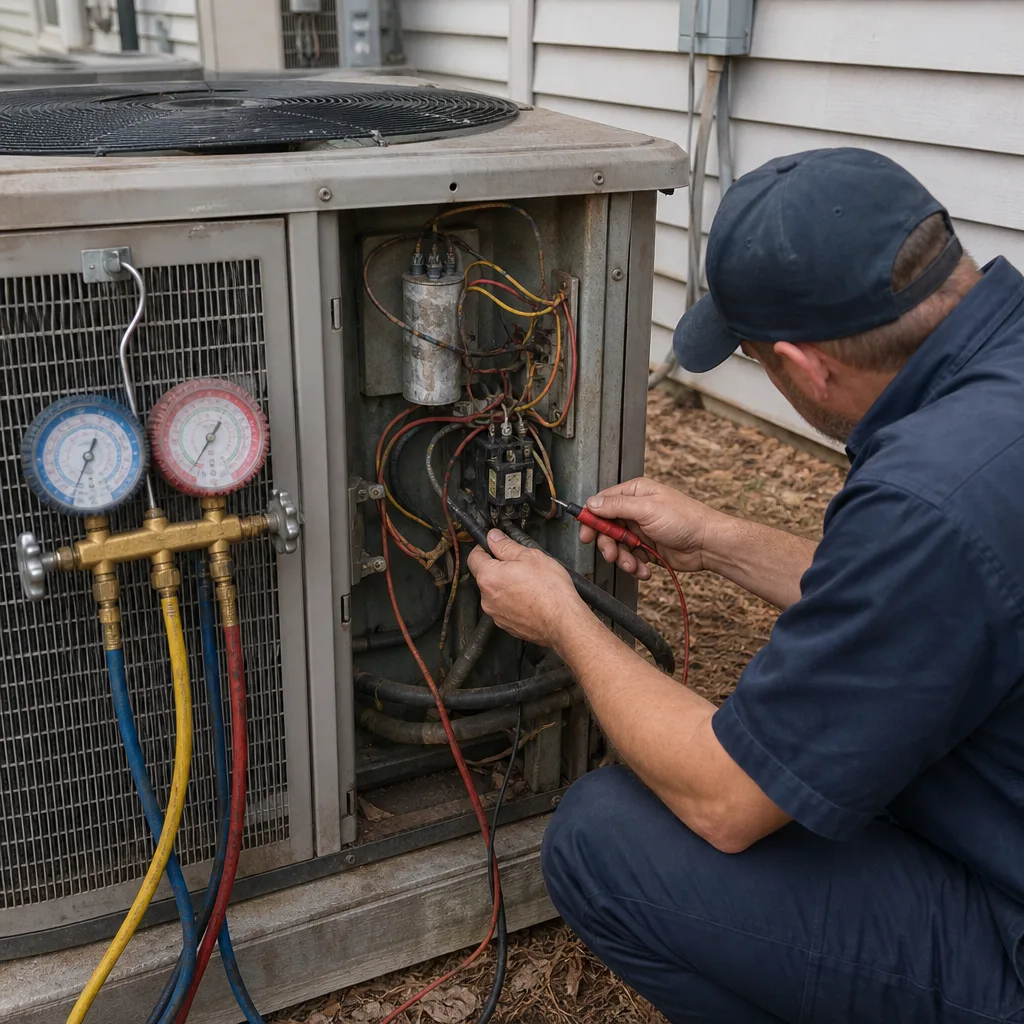 Before
 After
After