
Last updated October 16, 2026
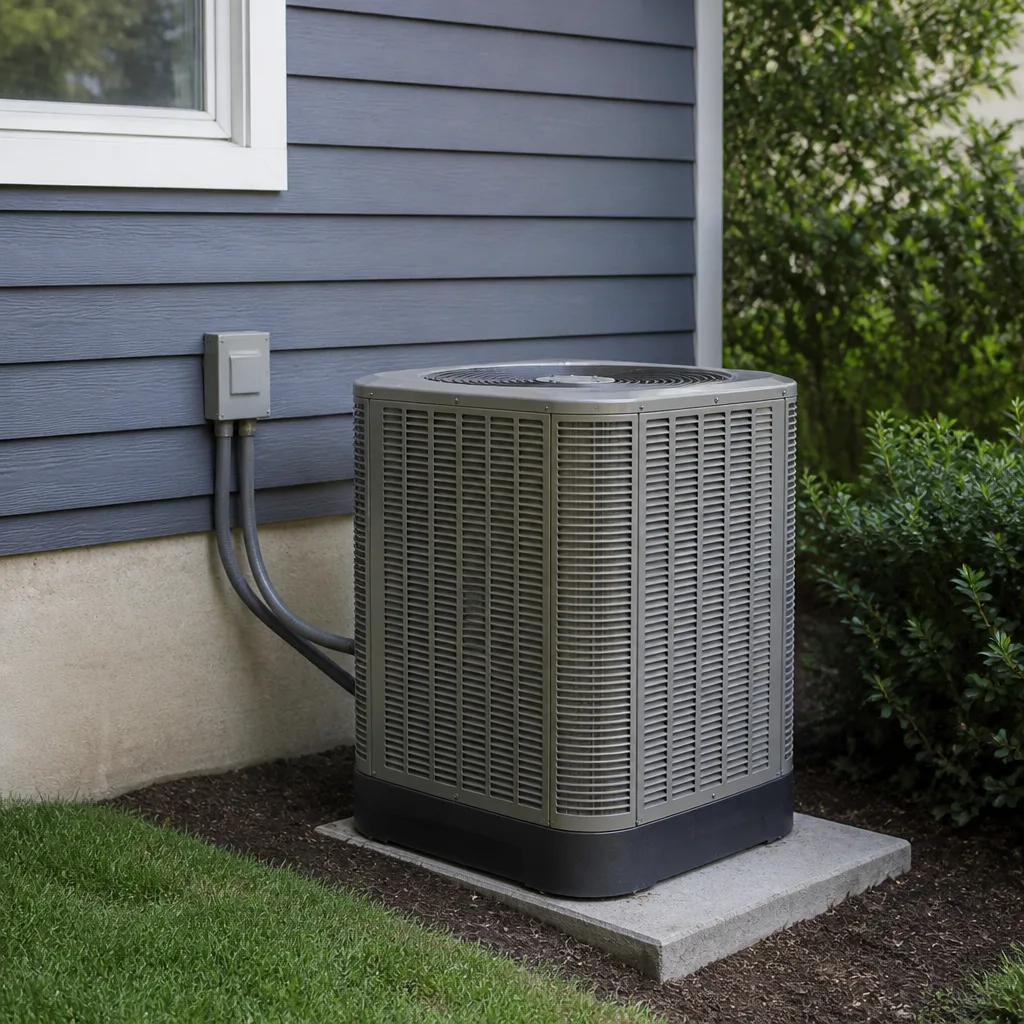 AC repair
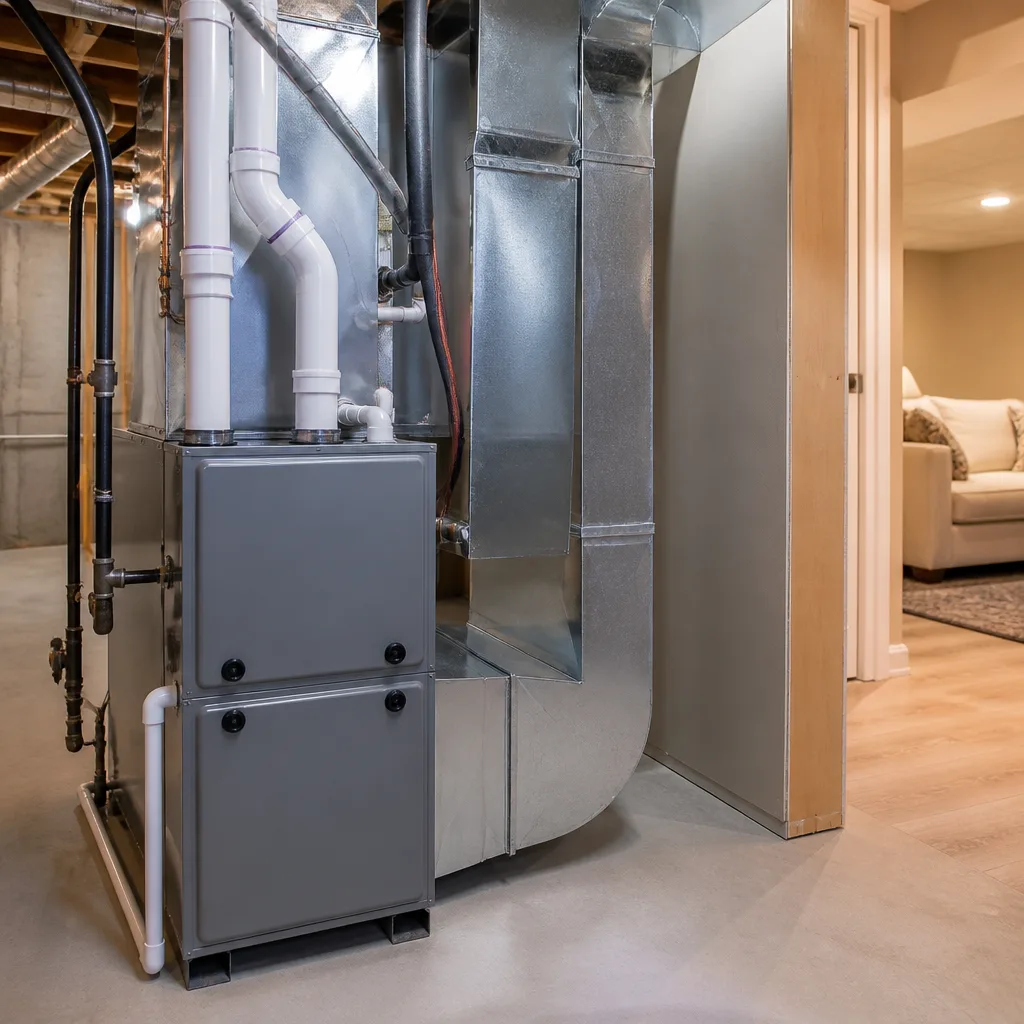 Furnace & heating
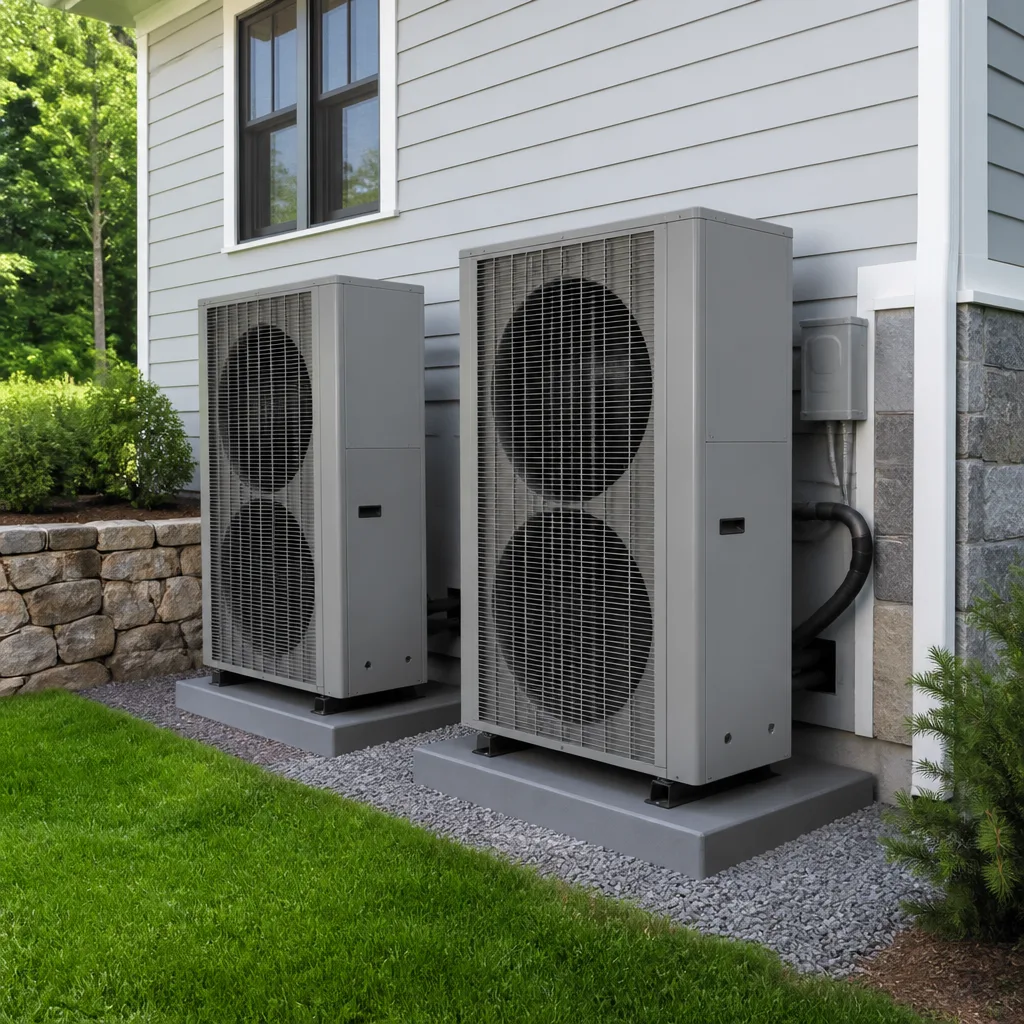 Heat pumps
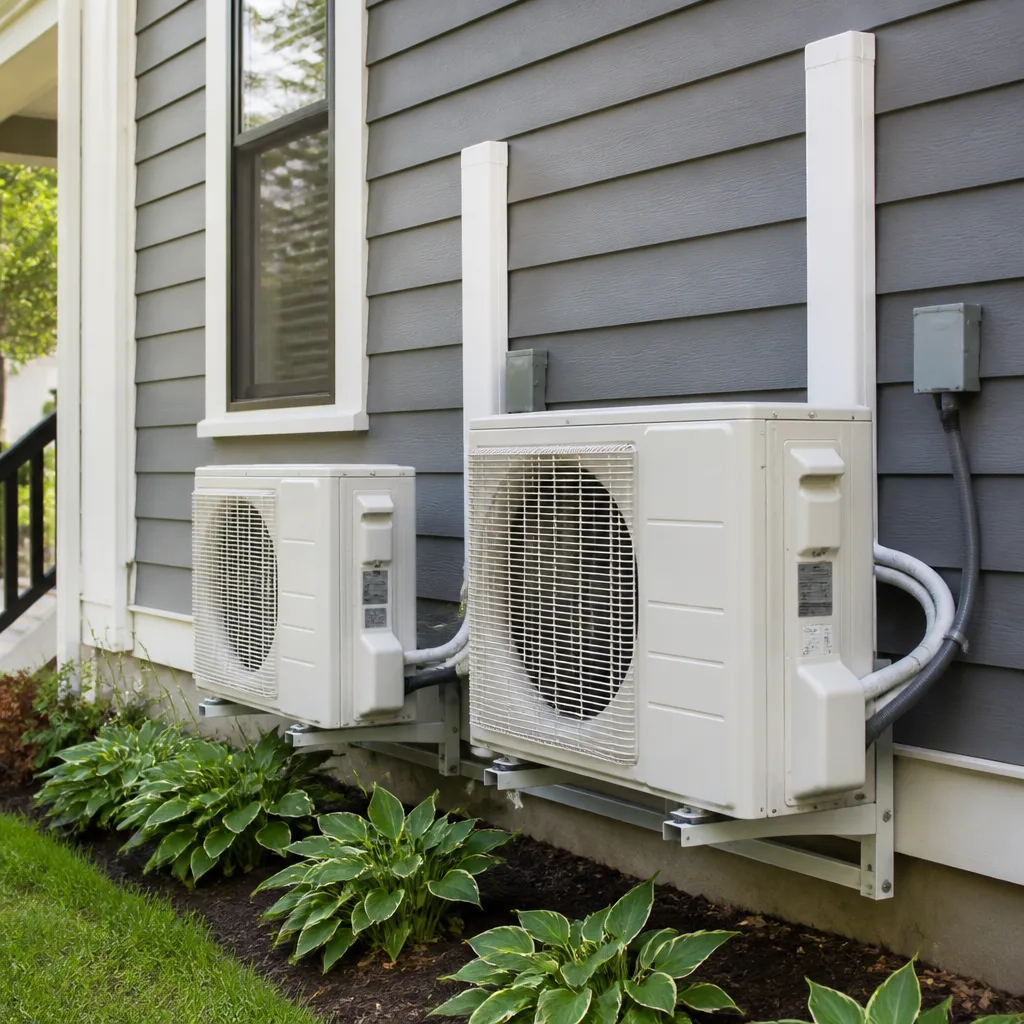 Ductless mini splits
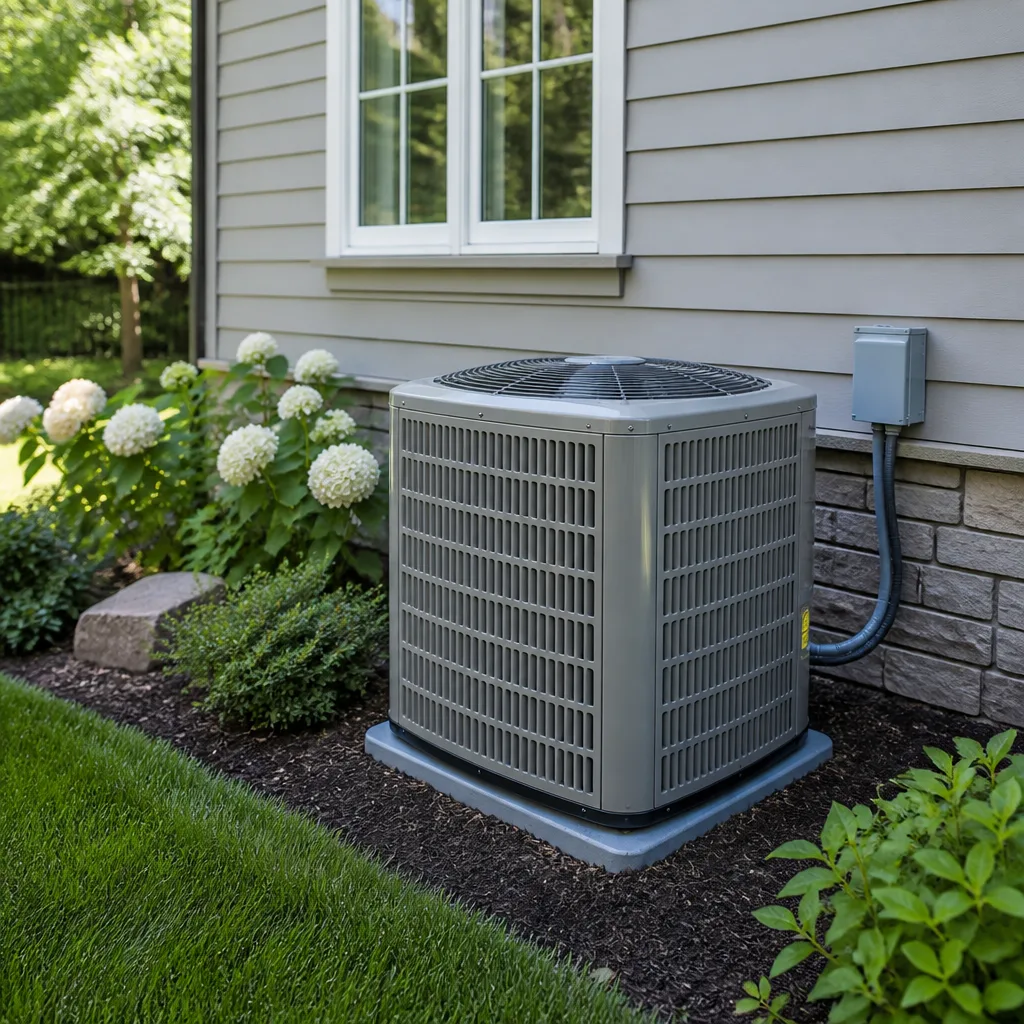 Carrier
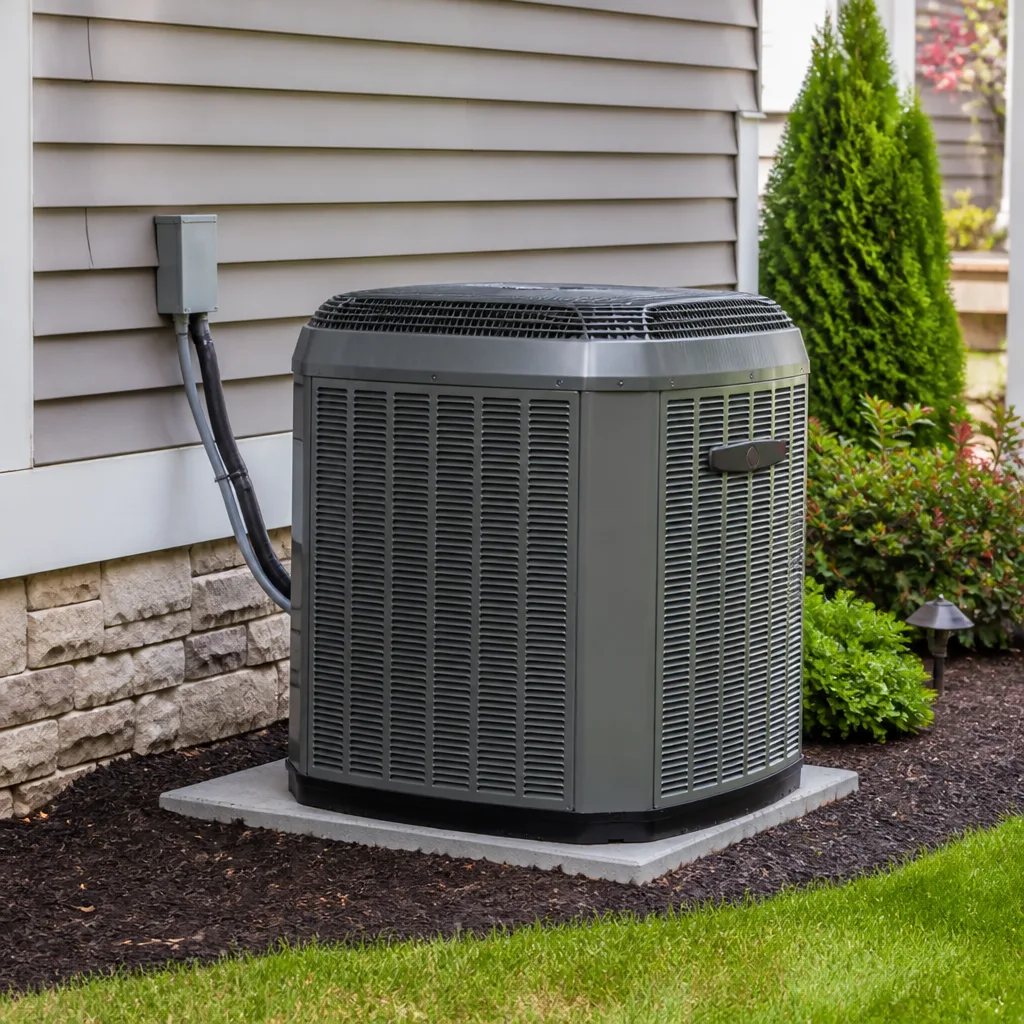 Trane
Trane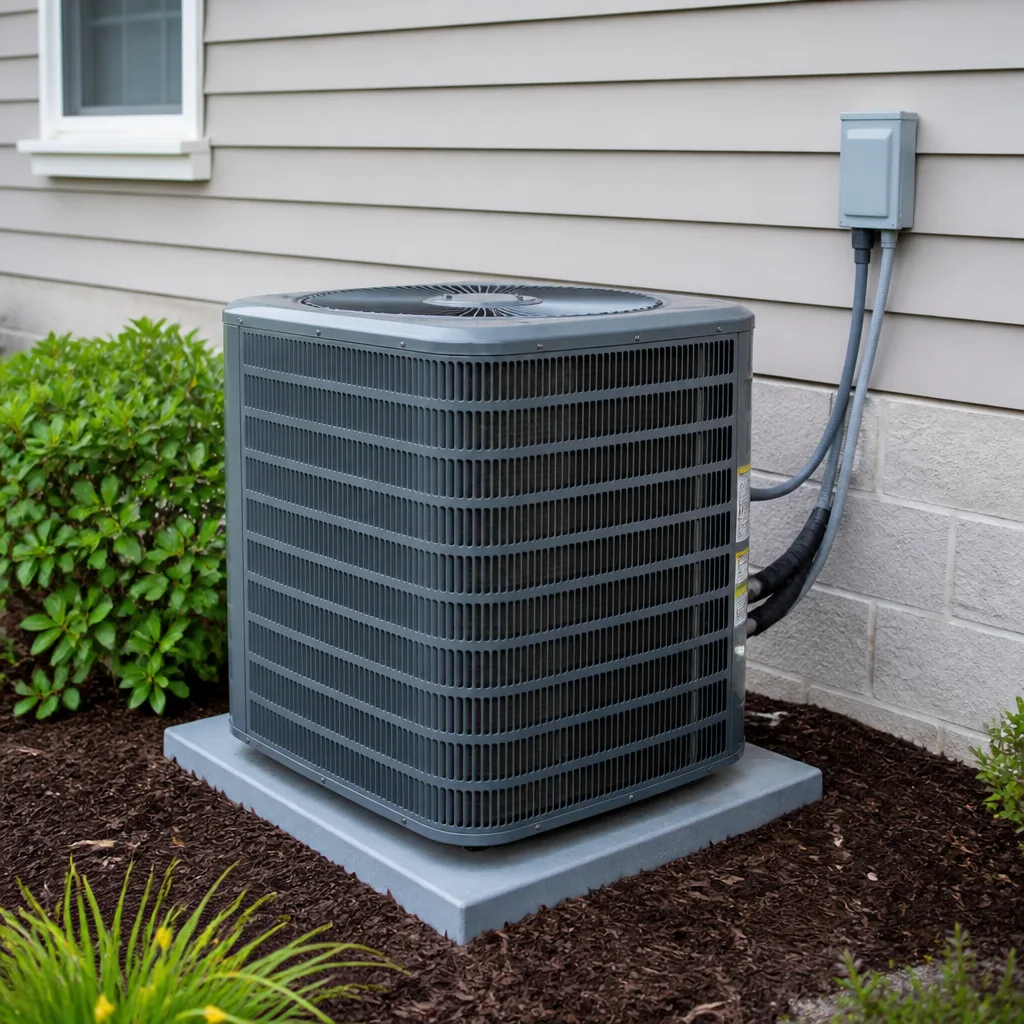 Goodman
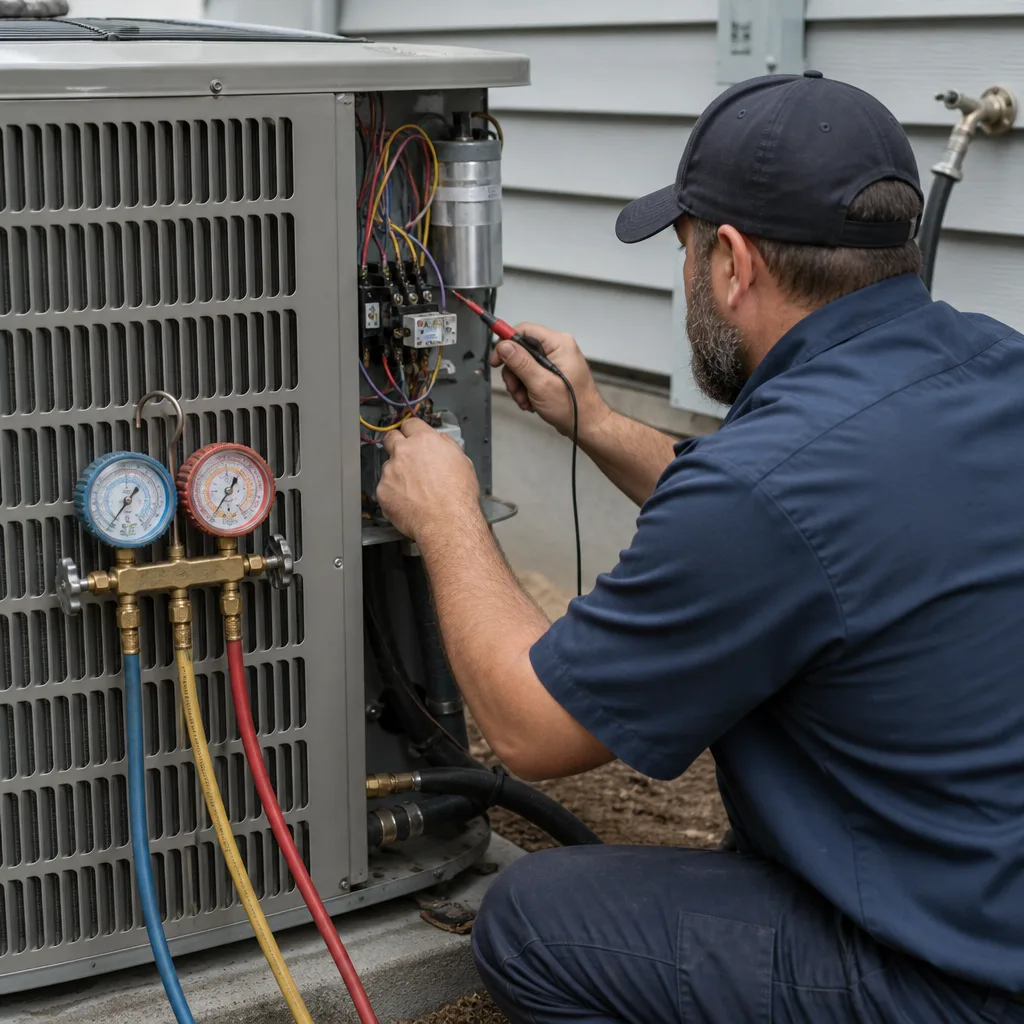
Seasonal tune-up and full diagnostic on your Carrier, Trane, or Goodman system - readings shown to you before any repair is proposed
Diagnosis first, numbers second - you approve the repair price before a single part goes in.
Get your free estimateThe Complete Guide to HVAC in Alpharetta
Alpharetta sits in a humidity corridor that can push indoor relative humidity above 65% even when the thermostat reads 72°F – a condition no national HVAC guide mentions, but one that quietly ruins air quality, wood floors, and ductwork insulation inside thousands of local homes. Most homeowners discover this the hard way: a system that cools fine but leaves the house feeling sticky, a musty smell that won’t go away, or hardwood floors that cup and warp in July. This guide maps exactly how Alpharetta’s unique combination of red-clay soil, dense tree canopy, and rapid construction shapes every HVAC decision you’ll make – from equipment sizing to maintenance timing. By the end, you’ll know what actually matters for your home, what to ignore, and how to plan for a system that handles Alpharetta’s specific climate instead of fighting it. Explore more guides & resources once you’ve finished here.
Styles & brands we work with
Quick Answer
HVAC in Alpharetta requires equipment and maintenance strategies tailored to the city’s high humidity, clay-heavy soil, and specific housing stock – not the same generic approach used across metro Atlanta. The most important factors are proper sizing for humidity control (not just temperature), managing moisture infiltration from Georgia red clay around foundations and crawl spaces, and understanding that many 2010 – 2024 builder-grade systems are now failing simultaneously. A well-planned HVAC system in Alpharetta targets 45 – 55% indoor relative humidity, uses two-stage or variable-speed equipment where budget allows, and gets serviced twice yearly – once before the humid season (April – May) and once before heating season (October – November).
Table of Contents
- How Alpharetta’s Climate Shapes HVAC Needs
- Red-Clay Soil and Moisture: What It Means for Your System
- The 2010 – 2024 Construction Boom and Builder-Grade Equipment
- Humidity Control: The Number Alpharetta Homeowners Should Track
- Equipment Tiers: Matching Systems to Alpharetta Homes
- Tree Canopy and Condenser Placement in Older Neighborhoods
- An Alpharetta-Specific Maintenance Calendar
- Common Mistakes to Avoid
- When to Call a Professional
- Frequently Asked Questions
- The Bottom Line
How Alpharetta’s Climate Shapes HVAC Needs
Alpharetta gets roughly 52 inches of rain per year, spread across every month, with summer dew points routinely sitting in the low 70s. That’s the detail that matters most: dew point, not temperature, determines how hard your air conditioner works. When the dew point is 72°F and your thermostat is set to 74°F, your system has to pull enormous amounts of latent heat out of the air before it can even start making the room feel cooler. A system sized only for sensible cooling (lowering the temperature) will short-cycle and leave humidity behind. That’s how you get a house that’s 72°F but still feels like a damp basement.
Winters bring a different challenge. Alpharetta’s cold snaps arrive fast, often dropping from the 50s into the 20s within 24 hours, and they’re frequently damp rather than dry. A furnace that’s oversized will blast hot air for eight minutes, shut off, and leave cold pockets in far rooms. A right-sized or slightly undersized furnace runs longer cycles, distributes heat evenly, and uses less fuel overall. The equipment conversation in Alpharetta always starts with two questions: how humid does this specific lot get, and how fast does this specific house lose heat or cool air. Everything else follows from those answers.
Red-Clay Soil and Moisture: What It Means for Your System
Georgia red clay is dense, expansive, and holds water like a sponge with a lid. When it rains, the top few inches turn slick, but water doesn’t percolate down quickly – it sits, then slowly migrates sideways. For homes with crawl spaces or ground-level mechanical closets, that means moisture pressure against foundation walls and high relative humidity under the floor structure year-round. We’ve seen crawl-space air handlers in Alpharetta rust out their blower housings in seven years because the return ductwork was pulling 70% relative humidity air straight across the coil and into the cabinet. The system was fighting a moisture problem it was never designed to handle.
Here’s what this means practically for Alpharetta homeowners:
- Crawl-space air handlers need a vapor barrier inspection. If the plastic on the ground is torn, shifted, or missing in sections, the air handler is pulling in moisture you can’t see. A $300 – $600 barrier repair often does more for indoor air quality than a $2,000 air purifier.
- Ductwork in unconditioned spaces should be insulated and sealed. In Alpharetta’s humidity, unsealed supply ducts in a vented crawl space will sweat. That condensation drips onto insulation, framing, and eventually invites mold. The fix is mastic sealing at every joint, not duct tape.
- Drain lines clog faster here. The combination of high humidity and crawl-space air means evaporator coils produce more condensate. When that water carries dust, pet hair, and the occasional bit of red clay dust, it forms a sludge that blocks the drain line. A wet switch that shuts the system down before the pan overflows is worth installing on any Alpharetta system that drains into a floor drain or sump.
Slab foundations have their own issue. If your outdoor condenser sits on a pad next to a slab home, check that the pad hasn’t settled or tilted. Clay soil expands and contracts through wet-dry cycles, and a tilted condenser stresses the refrigerant lines and reduces compressor oil circulation. It’s a slow failure, but we catch it regularly on systems that would otherwise run fine for years.
The 2010 – 2024 Construction Boom and Builder-Grade Equipment
Alpharetta added thousands of single-family homes between 2010 and 2024, particularly in the Windward, Crabapple, and west-of-400 corridors. Nearly all of them got builder-grade HVAC equipment: single-stage condensers, basic PSC blower motors, and the minimum-efficiency furnace the developer could spec without blowing the construction budget. That equipment has a realistic service life of 12 – 15 years in this climate. Do the math, and you’ll see why we’re now replacing a wave of systems in homes built between 2010 and 2016. It’s not that the equipment was defective. It’s that it was sized for the closing table, not for how the house actually performs.
Three signs your builder-grade system is nearing the end of its useful life:
- Your summer electric bills have crept up 20 – 30% compared to three years ago with no change in usage. That’s the condenser working harder to hit the same temperature setpoint because the coil is internally restricted or the compressor is losing volumetric efficiency.
- The system runs almost continuously on peak summer days. A properly sized system in Alpharetta should cycle off at least briefly even at 95°F. If it never shuts off, the capacity is gone or the ductwork is leaking conditioned air into the attic.
- Repairs are stacking up. A $400 capacitor in June, a $600 blower motor in August, a $900 control board in November – at some point you’re financing a replacement one part at a time. The 365-Day Done Right Promise at Meadowsweet Heating and Air Alpharetta home means every repair we make is guaranteed, but honest math matters: when annual repair costs hit 50% of replacement cost, replacement is the better decision.
Humidity Control: The Number Alpharetta Homeowners Should Track
Indoor relative humidity in Alpharetta should stay between 45% and 55% during cooling season. Below 45%, you’ll notice dry sinuses, static shocks, and wood furniture starting to shrink. Above 60%, you’re inviting dust mites, mold growth on cool surfaces, and that musty smell that settles into carpets and closets. The frustrating part is that a single-stage air conditioner can only dehumidify while it’s actively cooling. When the thermostat is satisfied, dehumidification stops – even if the house is still at 65% relative humidity. That’s why so many Alpharetta homes feel clammy on mild-but-humid days when the AC barely runs.
Equipment features that actually solve this problem, ranked by effectiveness:
- Variable-speed air handlers (best). The blower ramps up slowly, pulling air across the coil at low speed for the first several minutes of a cycle. This maximizes latent heat removal (humidity) before sensible cooling (temperature) begins. In our experience, a variable-speed air handler paired with a two-stage or variable-speed condenser holds 50% relative humidity in Alpharetta homes on all but the most extreme days.
- Two-stage condensers (good). The compressor runs at roughly 65 – 70% capacity on low stage, which means longer run times and more continuous dehumidification. The low stage is also quieter, which neighbors in tightly-spaced Alpharetta subdivisions appreciate.
- Whole-home dehumidifiers (targeted fix). For homes with persistent springtime and fall humidity issues – a common problem in shaded lots along Old Milton and Webb Bridge corridors – a ducted dehumidifier solves the shoulder-season problem that even the best AC can’t address. It runs whenever the relative humidity climbs above a setpoint, independent of the thermostat.
A quick note on sizing. A common Alpharetta mistake is oversizing the AC to “make sure it keeps up.” An oversized system cools the house quickly, satisfies the thermostat, and shuts off before it has removed meaningful humidity. The result: a house that’s 70°F and 68% relative humidity. That’s not a temperature problem. That’s a sizing problem. Contractors who replace equipment without running a Manual J load calculation – the industry-standard method for sizing based on square footage, insulation, window area, orientation, and local climate data – are guessing. Our How to Hire a HVAC Contractor in Alpharetta: A Step-by-Step Guide covers what else to verify before signing. In Alpharetta’s humidity, guessing wrong means a clammy house.
Equipment Tiers: Matching Systems to Alpharetta Homes
There’s no single “best” HVAC brand for Alpharetta. The right system depends on your home’s size, age, insulation level, and how long you plan to stay. Meadowsweet Heating and Air services nine major brands – Carrier, Trane, Lennox, Goodman, Rheem, York, Daikin, Bryant, and American Standard – and the honest answer is that installation quality and sizing matter more than the badge on the cabinet. A perfectly installed Goodman will outperform a badly installed Trane every single time. Still, the tiers below give you a framework for understanding what different equipment levels deliver in this climate.
Tier 1: Single-Stage, Base Efficiency (Builder-Grade Replacement)
Typical brands: Goodman, Rheem, York, Bryant base lines. Best for: 1,200 – 2,400 sq ft homes where the homeowners plan to move within 5 years, or rental properties. Expected performance in Alpharetta: Cools adequately in summer, but you’ll notice humidity creep on mild days. 14 – 16 SEER2 is the standard range. Expect a 12 – 15 year life. This equipment is honest about what it is: functional, affordable, and outmatched by Alpharetta’s specific humidity profile on about 40 – 50 days per year.
Tier 2: Two-Stage or Variable-Speed Condenser, ECM Blower Motor
Typical brands: Carrier Performance, Trane XR17, Lennox Elite, American Standard Silver. Best for: 2,000 – 3,500 sq ft homes in Alpharetta subdivisions where builders ran tight lot lines and neighbors are close. Expected performance: Meaningful humidity control improvement over single-stage. Longer run times mean more even temperatures between floors. Low-stage operation drops outdoor unit noise noticeably, which matters when the condenser sits six feet from a neighbor’s breakfast nook. 16 – 18 SEER2. Expect a 15 – 18 year life when maintained.
Tier 3: Variable-Speed Everything, Communicating Controls
Typical brands: Carrier Infinity, Trane XV, Lennox Signature, American Standard Platinum. Best for: 3,000+ sq ft homes, homes with finished basements or bonus rooms over garages, and homeowners who plan to stay 10+ years. Expected performance: This is the equipment that actually holds 50% relative humidity across an Alpharetta summer. The communicating thermostat monitors indoor and outdoor conditions continuously and adjusts compressor speed and blower airflow in tiny increments. The house feels the same temperature everywhere – which, in a two-story Georgian with a south-facing wall of windows, is the difference between “the system works” and “the whole house actually works.” 18 – 21 SEER2. Expect an 18 – 22 year life.
For most Alpharetta homeowners, Tier 2 hits the sweet spot. The humidity control difference between Tier 1 and Tier 2 is real and noticeable in this climate. The jump from Tier 2 to Tier 3 is about comfort at the margins and long-term energy savings – real, but it takes 8 – 12 years to recoup the upfront difference in most homes.
Tree Canopy and Condenser Placement in Older Neighborhoods
Alpharetta’s mature tree canopy is one of the city’s defining features – and it creates a specific HVAC problem most installation crews ignore. In neighborhoods like Webb Bridge, Windward, and the older sections of Crabapple, decades-old oaks and maples shade homes beautifully in summer. That shade reduces cooling load, which is good. But those same trees drop leaves, pollen, and fine organic debris onto outdoor condensers. The coil – the thin aluminum fins wrapped around the outdoor unit – clogs. When it clogs, the system can’t reject heat, head pressure rises, and the compressor runs hotter. In a climate where the condenser already works hard all summer, a partially clogged coil can shorten compressor life by 30 – 40%.
Placement matters more than most homeowners realize:
- Never place a condenser directly under a broadleaf tree’s drip line. If leaves land on the unit continuously, budget for coil cleaning twice per cooling season – or relocate the unit. A coil cleaning in Alpharetta typically runs $120 – $250 depending on access and how badly it’s packed.
- Aim for at least 24 inches of clearance on all sides. The service panel side needs 30 – 36 inches for safe access. In tight side yards, this often means moving the unit or accepting that some work will take longer.
- Shade is good, enclosure is not. A condenser in afternoon shade operates more efficiently, but a condenser boxed in by fences, shrubs, and lattice panels recirculates its own hot exhaust air. That’s a silent efficiency killer that shows up on the utility bill but rarely on a service ticket.
If your condenser sits under trees and you haven’t had the coil cleaned in two years, it’s not a question of whether it’s dirty – it’s how dirty. A careful coil cleaning with the proper detergent and a gentle water rinse restores capacity and lowers running cost. Power washing is not the answer; it folds the fins flat and makes the problem worse permanently.
An Alpharetta-Specific Maintenance Calendar
Generic maintenance advice says “change your filter every 90 days” and “schedule a tune-up twice a year.” That’s directionally correct but misses the specific timing that matters in Alpharetta. Here’s a calendar built around this city’s actual weather patterns:
April – May: Pre-Humidity Season Service
- Replace the air filter with a MERV 8 – 11 rated filter. In Alpharetta’s pollen-heavy spring, the filter will load up fast. A fresh filter in mid-April catches the worst of the oak and pine pollen before it reaches the coil.
- Inspect and clear the condensate drain line. Algae and sludge grow faster when the AC starts running consistently. If your system has a float switch, confirm it trips correctly. A clogged drain line that overflows can damage floors, drywall, and the air handler itself.
- Clean the outdoor coil. March winds and April pollen coat the condenser fins, especially on tree-shaded lots. Cleaning before peak season means the system starts summer at full capacity.
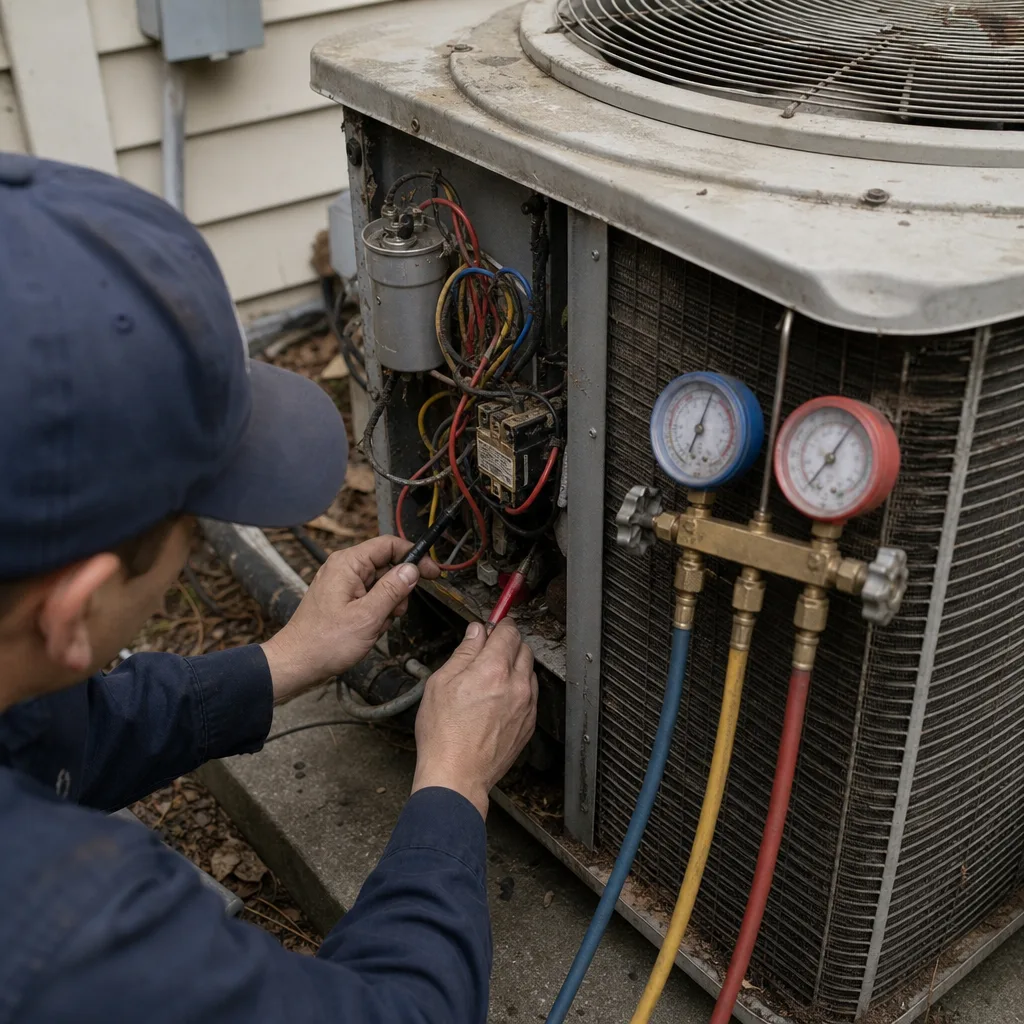
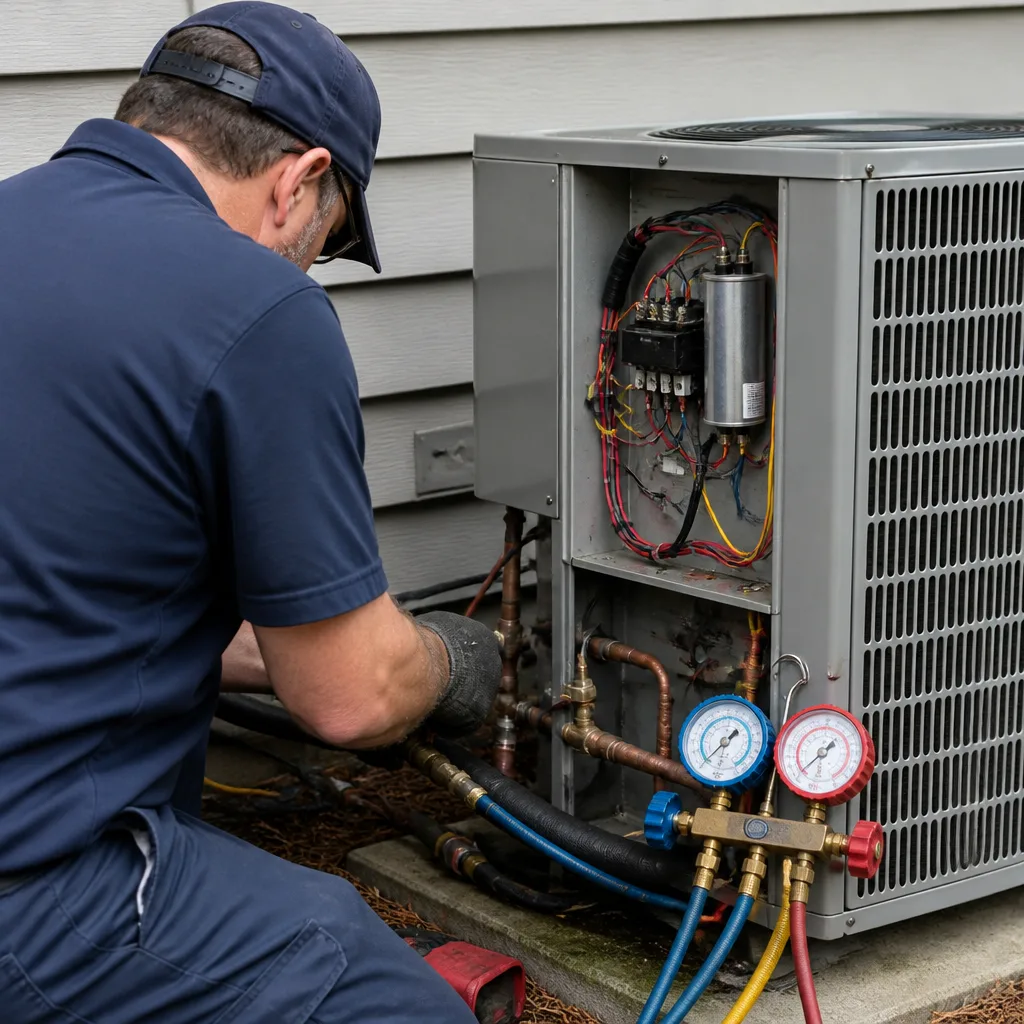
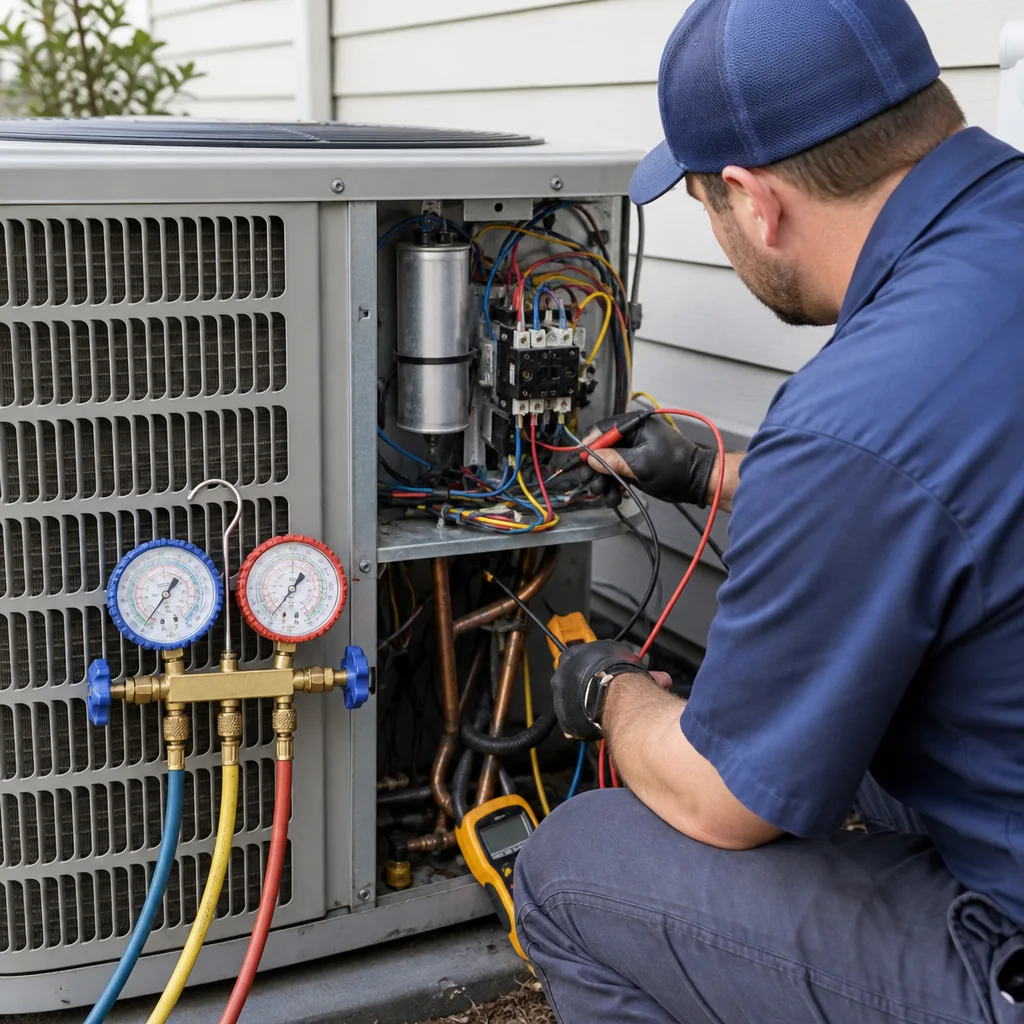
- Check refrigerant pressures and superheat/subcooling. Both undercharge and overcharge reduce efficiency and accelerate compressor wear. This is a 20-minute check that only a licensed professional should perform due to the pressure and electrical hazards involved.
October – November: Pre-Heating Season Service
- Inspect the heat exchanger. In gas furnaces, a cracked heat exchanger is a carbon monoxide risk. This is not a DIY inspection – it requires a combustion analyzer and knowledge of what you’re looking at. Every Alpharetta home with a gas furnace should have this checked annually.
- Test the carbon monoxide detectors. Georgia code requires CO detectors in homes with gas appliances, but batteries die and sensors expire. Replace CO detectors every 7 years, not when they beep.
- Verify the furnace’s flame sensor and igniter. These small components cause a disproportionate share of “furnace won’t light” calls on the first cold night of the season. Catching wear in October prevents a 40°F night with no heat.
- Seal visible duct leaks in the attic or crawl space. Any joint with visible gaps or peeling tape is leaking conditioned air. In Alpharetta homes with vented attics, duct leakage losses typically run 15 – 25% before sealing.
One honest note: most manufacturers require documented annual maintenance to keep the parts warranty valid. Skip the maintenance, and you may be paying for a $1,800 compressor that should have been covered. In our experience, homeowners who follow this calendar get 3 – 5 more years of useful life from their equipment than those who only call when something breaks. The AC Repair in Alpharetta work we do on neglected systems is consistently more expensive than the same repair on a maintained system.
Common Mistakes to Avoid
- Closing too many supply vents to “direct” airflow. Modern ECM blower motors respond to increased static pressure by working harder, not smarter. Closing more than 10 – 15% of the vents in an Alpharetta home causes the blower to pull more amps, the coil to run colder, and the system to freeze up on humid days. If certain rooms are consistently too hot or too cold, the fix is airflow balancing or zoning, not closed vents.
- Setting the thermostat to 68°F on a 95°F day. A properly sized system can’t hold 68°F when the outdoor design temperature for Alpharetta is around 92 – 95°F. Setting it lower doesn’t cool faster – it just makes the system run longer and eventually ice the coil. Set it to 74 – 76°F in summer and let the system manage humidity at that setpoint.
- Skipping duct sealing because “it’s working fine.” Leaky ducts in a hot attic mean your AC is cooling the attic, not the house. The air quality problem is worse than the energy loss: return ducts in an unconditioned attic pull in whatever is up there – dust, fiberglass particles, and hot humid air. Duct sealing is one of the highest-ROI fixes available to Alpharetta homeowners.
- Replacing equipment without asking about a load calculation. If a contractor quotes a replacement based on “what was there before” without inspecting insulation, windows, and duct layout, they’re guessing. The previous system may have been wrong from day one. A Manual J calculation takes an hour and changes the answer more often than not in Alpharetta’s varied housing stock.
- Ignoring the outdoor unit because it “still runs.” A compressor making a slight rattling sound, a condenser with visible corrosion at the coil bottom, or a unit that cycles on and off every five minutes is telling you something. Catching these early is the difference between a $400 repair and a $4,500 replacement.
- Buying the biggest system that fits the budget instead of the right size. In a humid climate, bigger is actively worse. An oversized system leaves the house cold and clammy, uses more energy, and wears out faster from short cycling. Right-sized is quiet, efficient, and comfortable.
When to Call a Professional
Some HVAC issues are safe to investigate yourself: a dirty filter, a tripped breaker that resets once, a thermostat with dead batteries. But certain situations call for a trained technician with the right tools and the right caution-see our DIY vs Professional HVAC: The Alpharetta Homeowner’s Decision Guide for where to draw the line. If you smell burning from the vents during heating season, shut the furnace off at the thermostat and call – that odor can signal electrical overheating or a cracked heat exchanger, both of which are hazards. If your AC is frozen over – a solid block of ice on the indoor coil or the copper lines – shut it off and let it thaw before calling; running it frozen risks damage to the compressor. If you hear grinding, screeching, or metallic rattling from either unit, shut it down. And if water is pooling around the air handler or staining the ceiling below an attic unit, that’s a drain or pan failure that can cause serious structural damage within days. Meadowsweet Heating and Air Alpharetta offers free estimates in Alpharetta – call (478) 606-5046 and a live person will answer, any hour, any day.
Frequently Asked Questions
A complete HVAC system replacement in Alpharetta typically runs $7,500 – $12,500 for a single-stage gas furnace and AC combo in a 2,000 – 2,800 sq ft home, $10,000 – $16,000 for a two-stage system with an ECM blower, and $14,000 – $22,000 for a variable-speed communicating system. For full details, see our HVAC Cost Breakdown: The Alpharetta Homeowner’s Reference for 2026. These ranges include installation, materials, refrigerant, and permit costs, but your exact price depends on access, ductwork condition, and equipment tier. Call (478) 606-5046 for a free estimate – we provide a written price before any work starts.
Twice yearly – once in April or early May before humidity season, and once in October or early November before heating season. The spring visit focuses on cooling performance and drain line function; the fall visit focuses on heat exchanger safety and ignition components. Annual documented maintenance also keeps your manufacturer’s parts warranty valid.
You can change filters, clear debris from around the outdoor unit, and verify the thermostat settings. But anything involving refrigerant, electrical components, gas lines, or heat exchangers requires licensing and specialized tools, and presents real safety risks. High-voltage electrical shocks, refrigerant burns, and carbon monoxide exposure are not worth the money saved on a DIY attempt.
High indoor humidity with a running AC usually means one of three things: the system is oversized and short-cycling, the system is single-stage and can’t dehumidify when it’s not actively cooling, or there’s air infiltration from a crawl space or leaky ducts pulling humid outside air into the home. A professional assessment can pinpoint the cause; the fix ranges from duct sealing to equipment replacement depending on what’s found.
A well-maintained system in Alpharetta lasts 15 – 20 years, with the condenser typically failing before the furnace. Builder-grade equipment in homes built 2010 – 2016 is reaching the end of that window now. Humidity is the primary factor that shortens system life here: compressors work harder, coils corrode faster, and airflow issues compound more quickly than in drier climates.
If the repair costs less than 30% of replacement cost and the system is under 12 years old, repair usually makes sense. If the system is 15+ years old, uses R-22 refrigerant, or has needed multiple repairs in the past two years, replacement is the better long-term decision. The math gets clearer when you compare expected utility savings from a 18 SEER2 system against another year of 14 SEER2 operation plus repair costs. Call us for an honest assessment – our technicians explain the price before the work, and we recommend repair when repair is the right call.
The Bottom Line
Alpharetta’s HVAC needs are shaped by one thing most guides miss: this city sits in a humidity corridor that challenges equipment in ways dry climates never do. The systems that fail here don’t usually fail from age – they fail from moisture, airflow restriction, and improper sizing at installation. The good news is that all three are addressable. Right-size the equipment with a load calculation. Control humidity with two-stage or variable-speed equipment where the budget allows. Maintain the system on Alpharetta’s actual weather calendar, not a generic one. And when the time comes for AC Installation in Alpharetta or Furnace Repair in Alpharetta, work with a company that respects how the home is left afterward – floors clean, price written down, and the job guaranteed. That’s the standard every Alpharetta homeowner should expect, and it’s the standard we hold ourselves to.
Written by Luis Serrano, Owner at Meadowsweet Heating and Air Alpharetta, serving Alpharetta since 2004.
See the difference
 Before
 After
After Before
 After
After Before
 After
After