
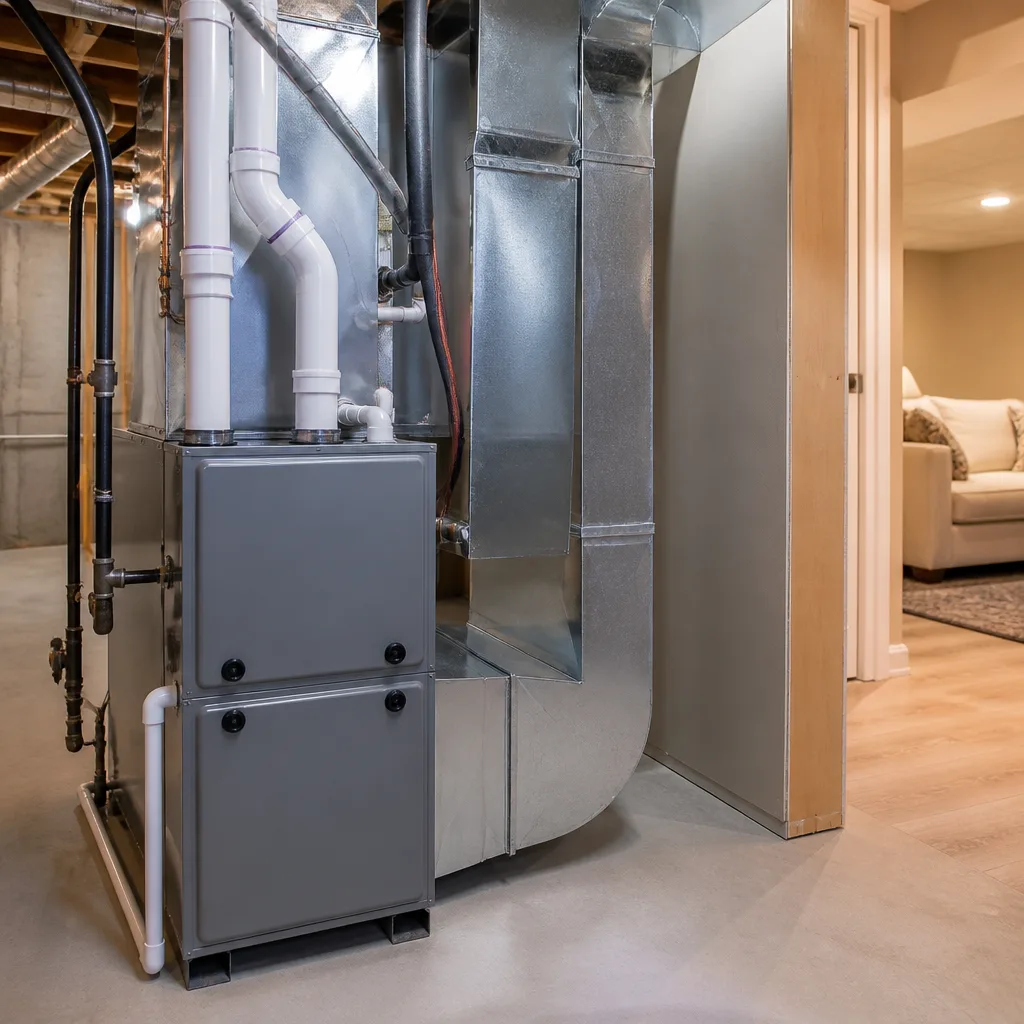
 Furnace & heating
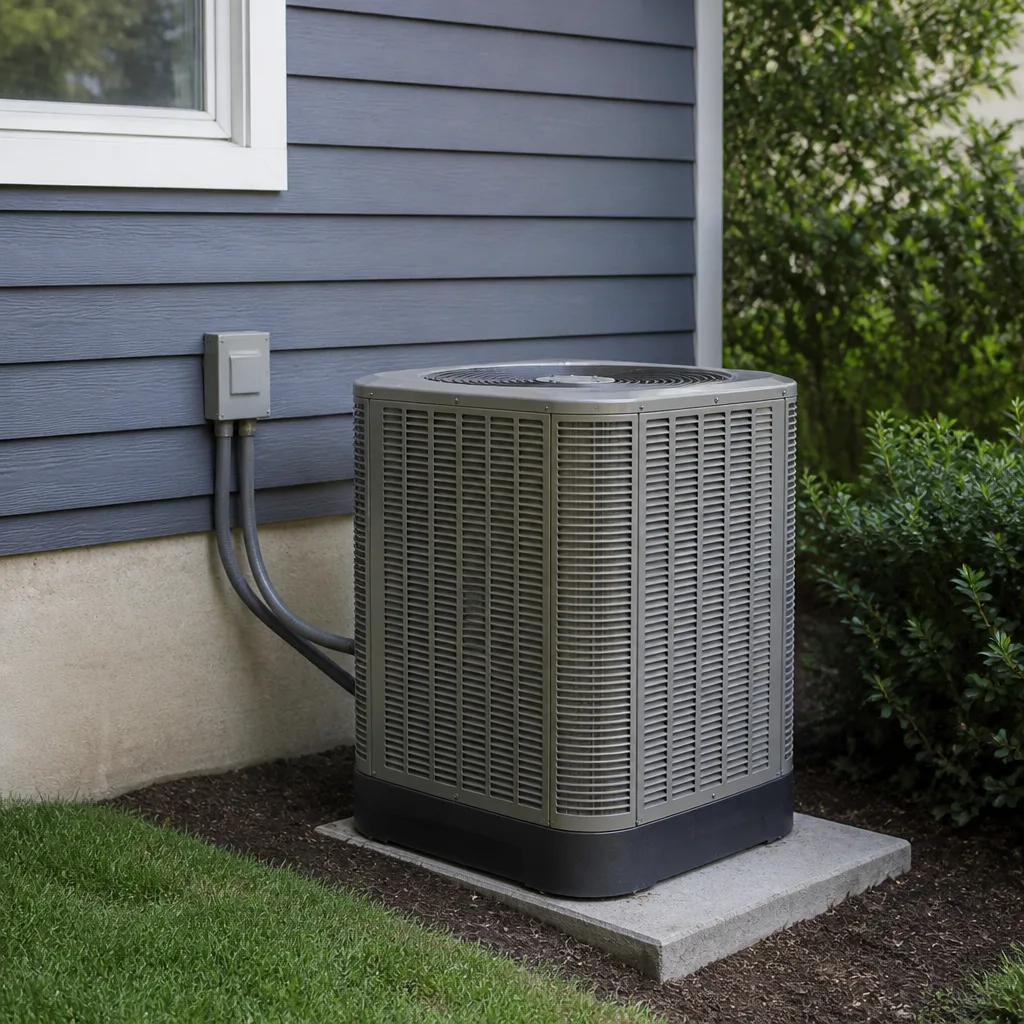 AC repair
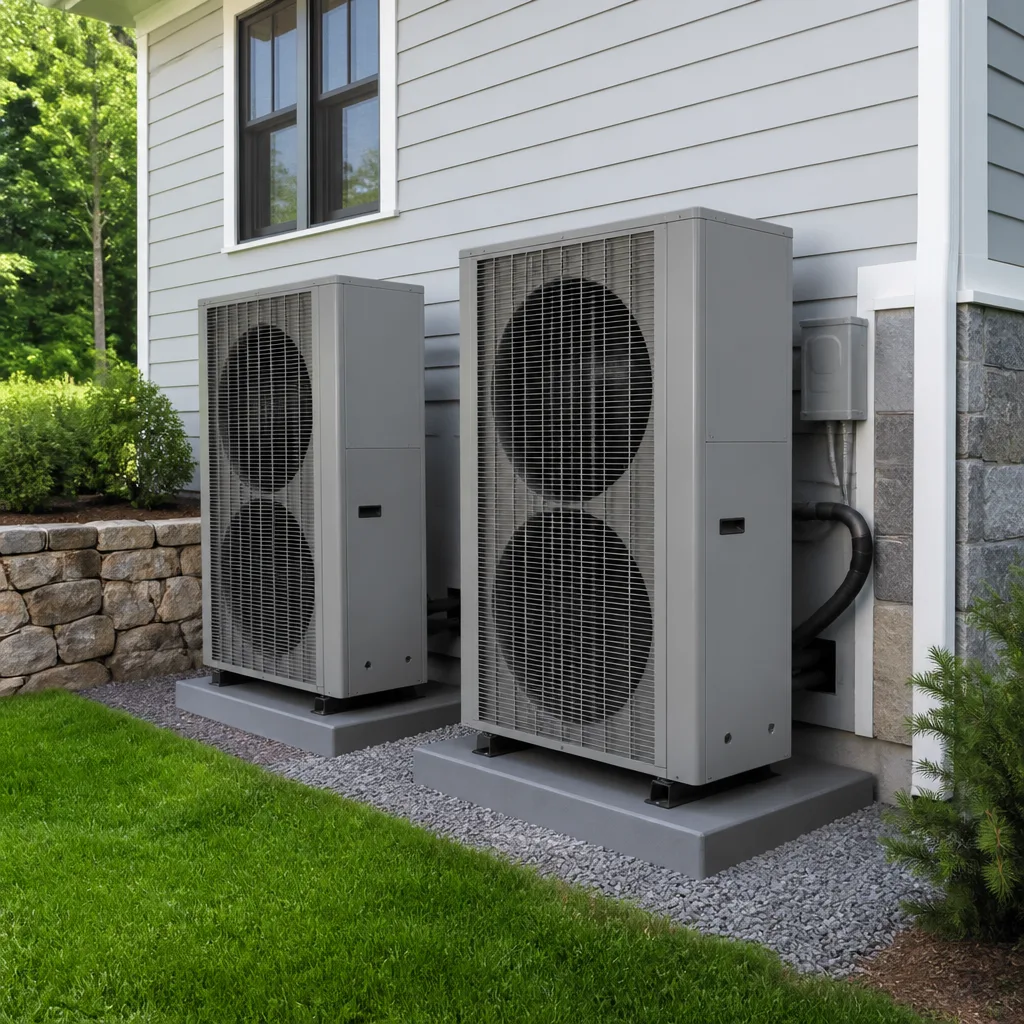 Heat pumps
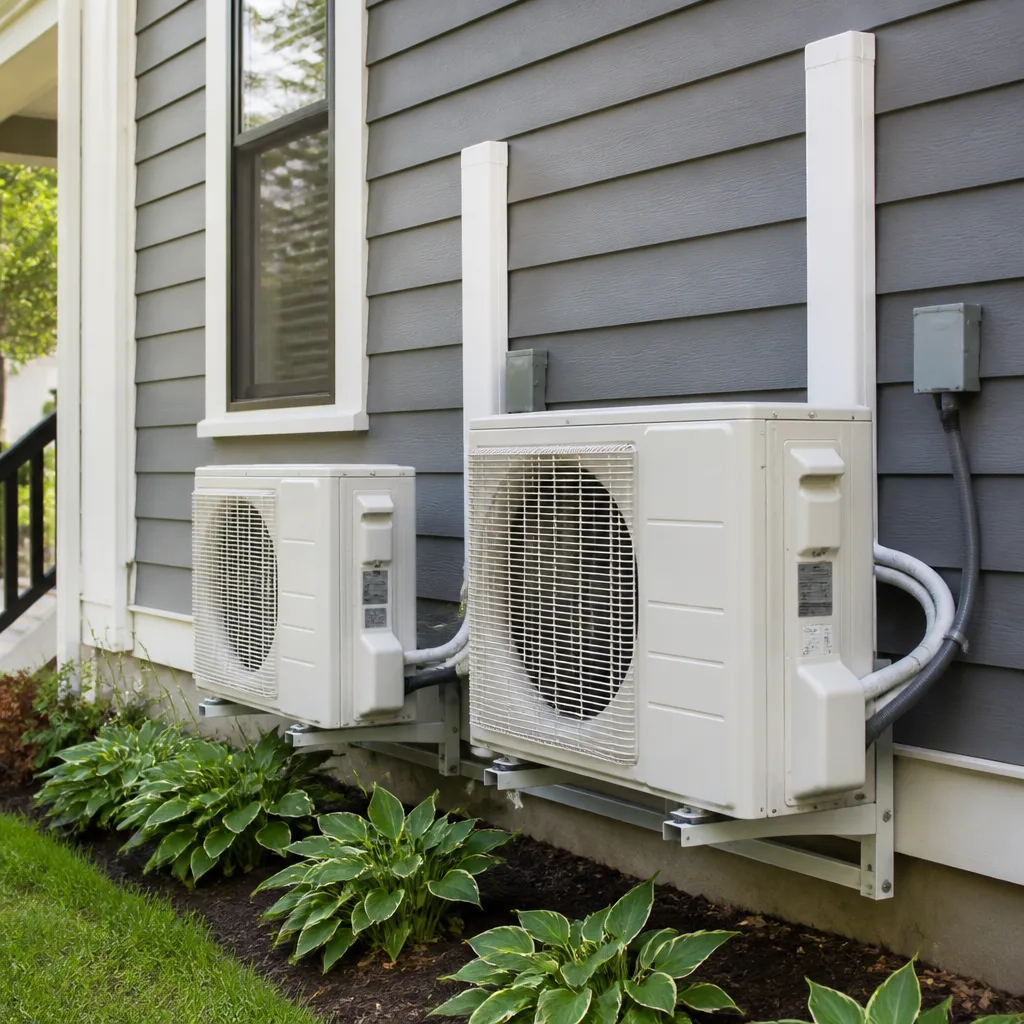 Ductless mini splits
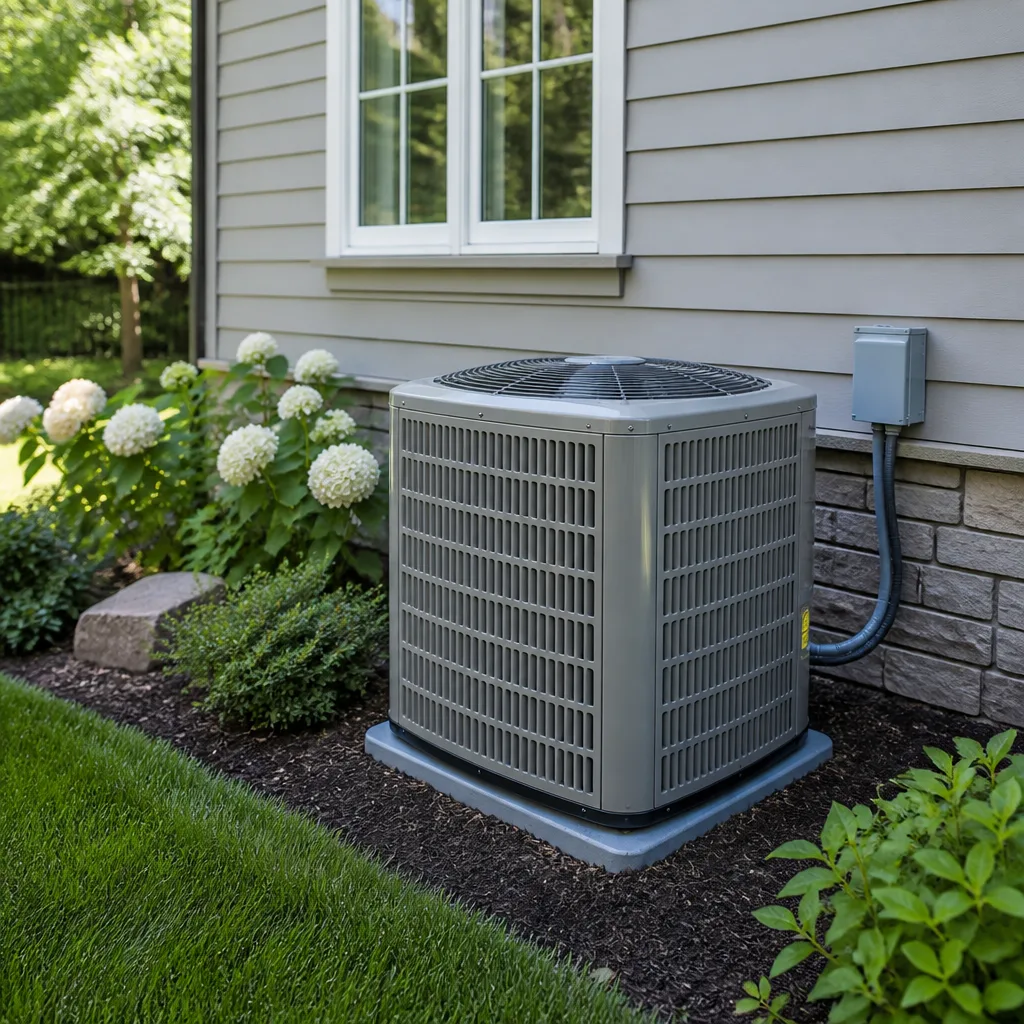 Carrier
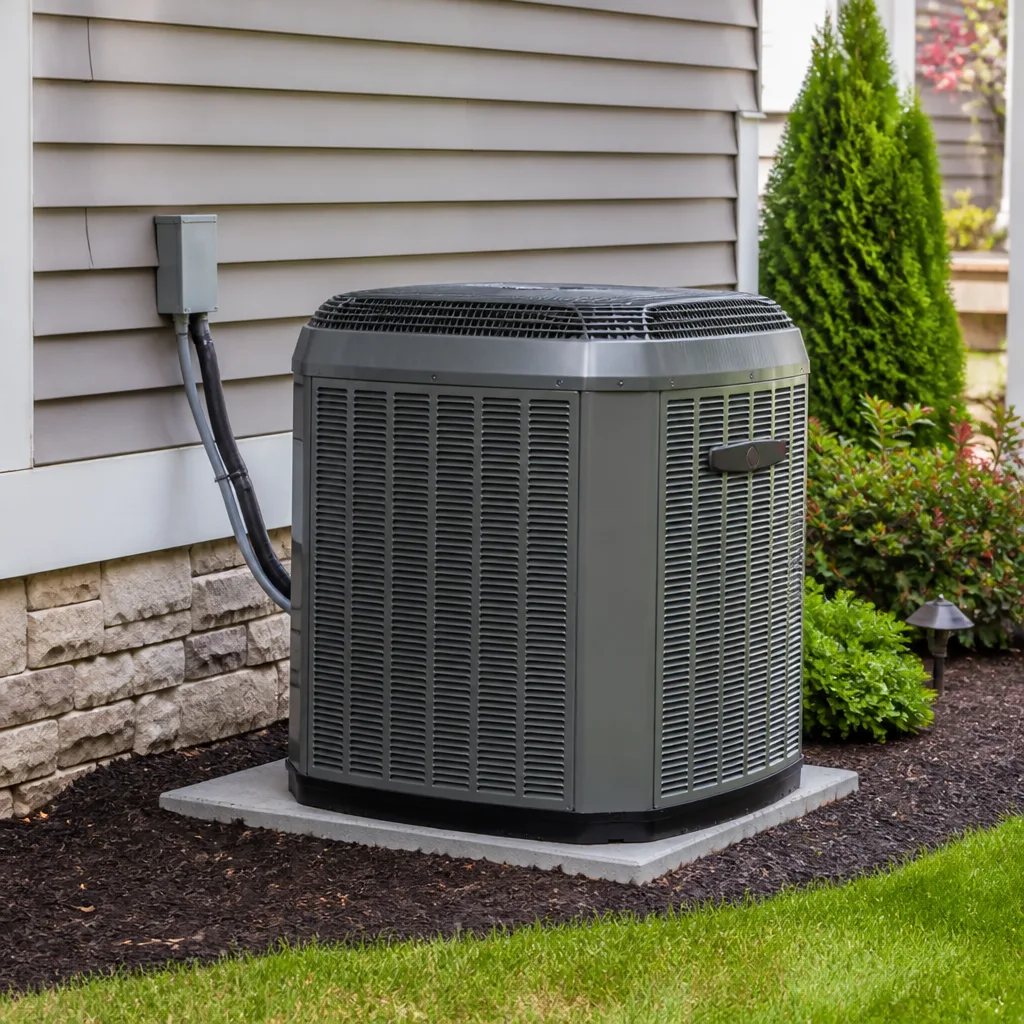 Trane
Trane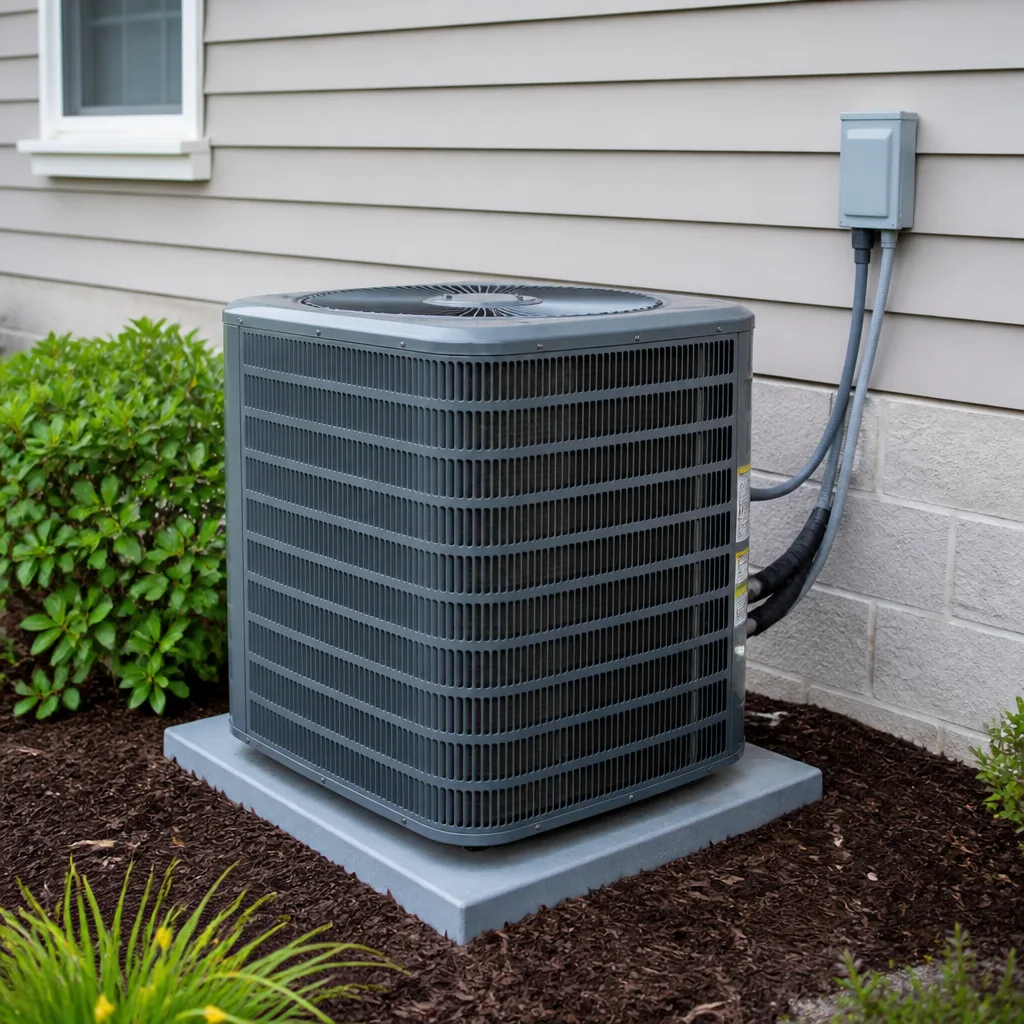 Goodman
Seasonal tune-up and full diagnostic on your Carrier, Trane, or Goodman system - readings shown to you before any repair is proposed
Diagnosis first, numbers second - you approve the repair price before a single part goes in.
Get your free estimateGoodman Capacitor Replacement: The Alpharetta Owner’s Guide
A Goodman capacitor replacement in Alpharetta typically runs $150 to $350 installed, including the part, labor, and our written warranty on the work. We stock capacitors that match Goodman’s spec range on our trucks, so most Alpharetta calls are finished same day. The usual story we hear is this: the outdoor unit hums but the fan won’t spin, or the compressor tries to start and gives up a second later. That faint click-and-hum is the capacitor telling you it’s done.
Capacitors are wear items. They’re not built to last the life of the condenser. Georgia’s long cooling seasons push them hard, and when one fails in July, the house gets uncomfortable in a hurry. The good news is this is one of the most straightforward and affordable fixes in air conditioning repair, provided the right part goes in.
Key Takeaways
- A failed Goodman capacitor usually presents as a hum, a hard-starting compressor, or a fan that won’t turn.
- The installed cost in Alpharetta lands between $150 and $350 for most Goodman residential systems.
- This is a live-voltage component. Do not open the condenser panel unless you know how to discharge it safely.
- We carry both Goodman OEM capacitors and spec-matched aftermarket equivalents on the truck.
- Every capacitor swap includes our 365-Day Done Right Promise and a written price before any work starts.
Styles & brands we work with
Which Goodman Models This Applies To
Goodman residential condensers and heat pumps built in the last twenty years share a common electrical platform, so the capacitor replacement process is consistent across most model lines. That includes the GSX series (GSX13, GSX14, GSX16), the SSX14 and SSZ14, the GSZ heat pump line, and the GMSS and GMS two-stage units. If your outdoor unit’s model plate starts with GS, SS, or GSZ, you’re almost certainly working with a standard single or dual-run capacitor.
Here’s the gotcha that trips up a lot of Alpharetta homeowners who try to source the part themselves: Goodman uses several capacitor microfarad (µF) ratings across its lineup, and the wrong one will shorten the life of a brand-new compressor. A GSX14 3-ton condenser typically calls for a 45/5 µF dual-run capacitor at 440 volts, while smaller 2-ton units often spec a 35/5 µF. The label on the old capacitor lists the exact rating. Match it exactly, not approximately.
On OEM versus aftermarket: Goodman OEM capacitors are made to a reliable standard, and we’re glad to install them. That said, quality aftermarket brands like Amrad (the US-made ones, specifically) carry a strong reputation among technicians and often outlast OEM units in Georgia heat. We’ll talk you through both options and give you a written price for each. You decide. The one thing we won’t install is a cheap no-name capacitor that costs $12 online and fails the following May. That’s a disservice in a climate that runs AC for eight or nine months a year.
We also stock capacitors for Carrier, Trane, and Lennox systems, since Alpharetta’s housing stock spans every major brand.
Signs Your Goodman Capacitor Replacement Is Failing
- The outdoor unit hums but the fan doesn’t spin. This is the classic dead fan-side capacitor. The motor is getting power but doesn’t have the jolt it needs to start turning. In many cases, a gentle manual spin of the blade (using a long screwdriver through the grill, never your hand) will kick it into rotation, but that only works when the fan winding is still alive. The fix is still the same: a new capacitor.
- The compressor tries to start, then clicks off. A weak start-side capacitor can’t deliver the torque required to get the compressor running against the refrigerant pressure in the lines. You’ll hear a buzz-hum for a second or two, then a thermal overload click. This repeated hard-starting is exactly what shortens compressor life.
- The AC is running but the air from the vents feels warm. A capacitor that’s fading rather than fully dead may let the fan run at reduced speed. Less airflow across the coil means less heat exchanged, and the house stays warmer than the thermostat says it should be. It’s a slow decline that’s easy to mistake for a refrigerant leak.
- The system works intermittently, especially on hot afternoons. Heat makes a weak capacitor weaker. If the unit starts fine in the morning but struggles at 3 p.m. when the roof and pad are baking, the capacitor is a prime suspect. A capacitor that’s marginal at 80 degrees may be completely non-functional at 95.
- Visible bulging or leaking from the capacitor body. If you’re already looking inside the condenser (again, only if you know how to do this safely), a swollen top, a bulging side, or oily residue at the terminals means the failure has already happened chemically. The capacitor may still work for a few days, but it is not recoverable.
One note from years of running calls in Alpharetta: compressors and fan motors rarely die in silence. If the unit’s been making a soft buzz or a hard-starting groan for a couple weeks, that’s the capacitor warning you. Ignoring it turns a $200 part into a $2,000 or $4,000 compressor or motor replacement.
See the difference
 Before
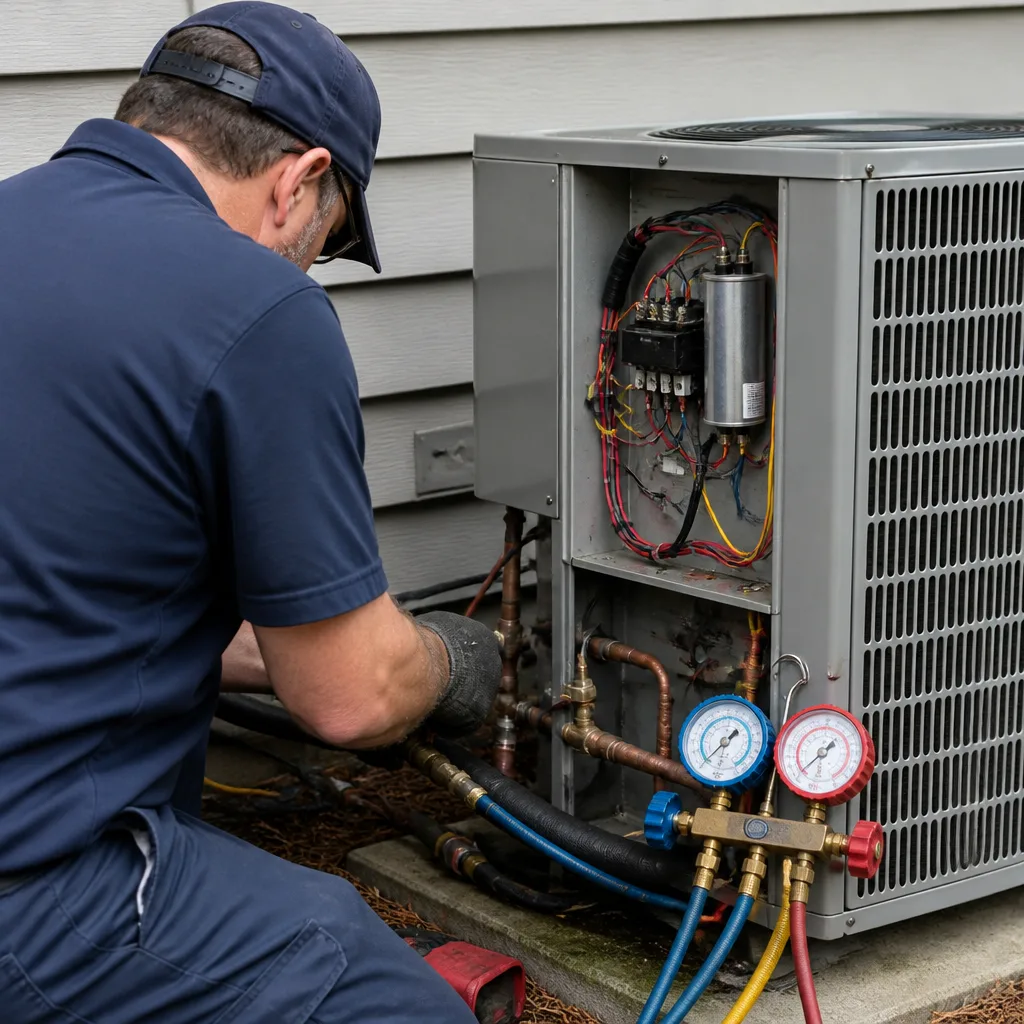 After
After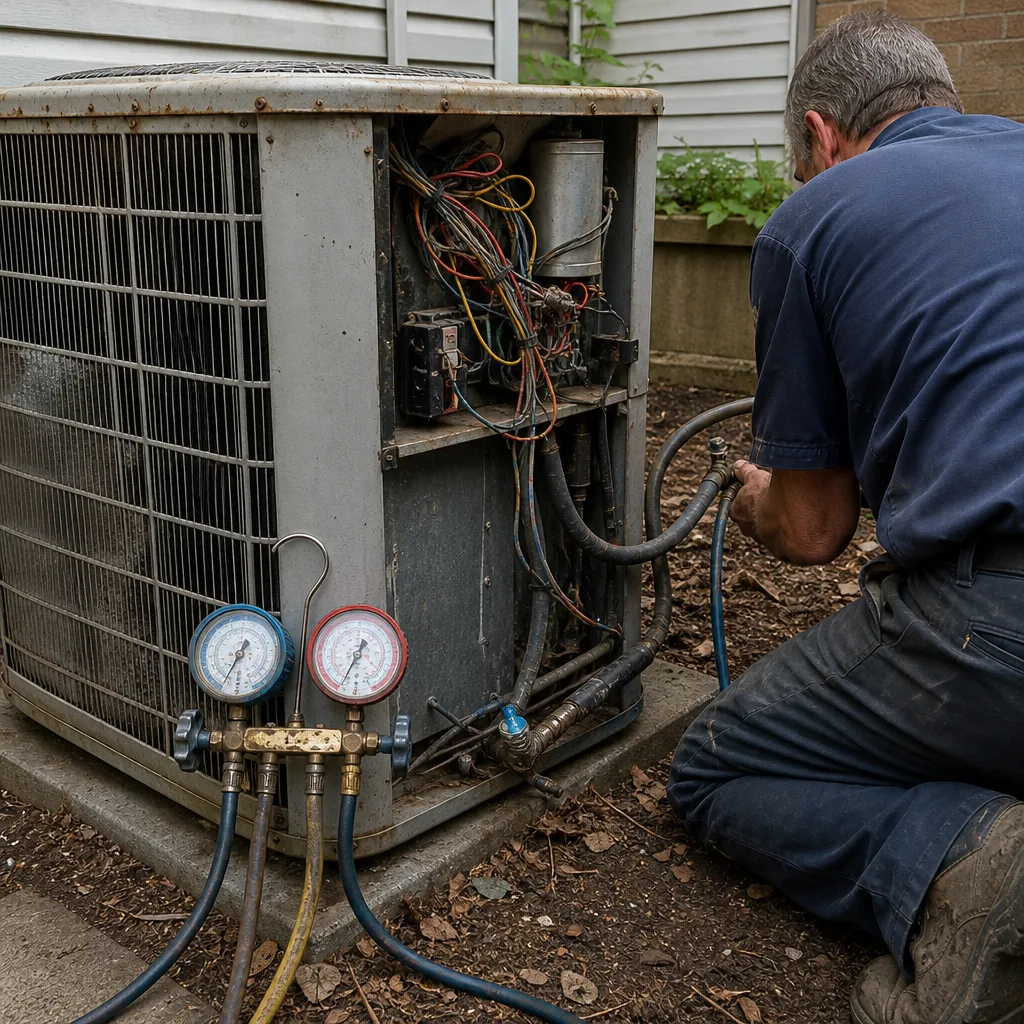 Before
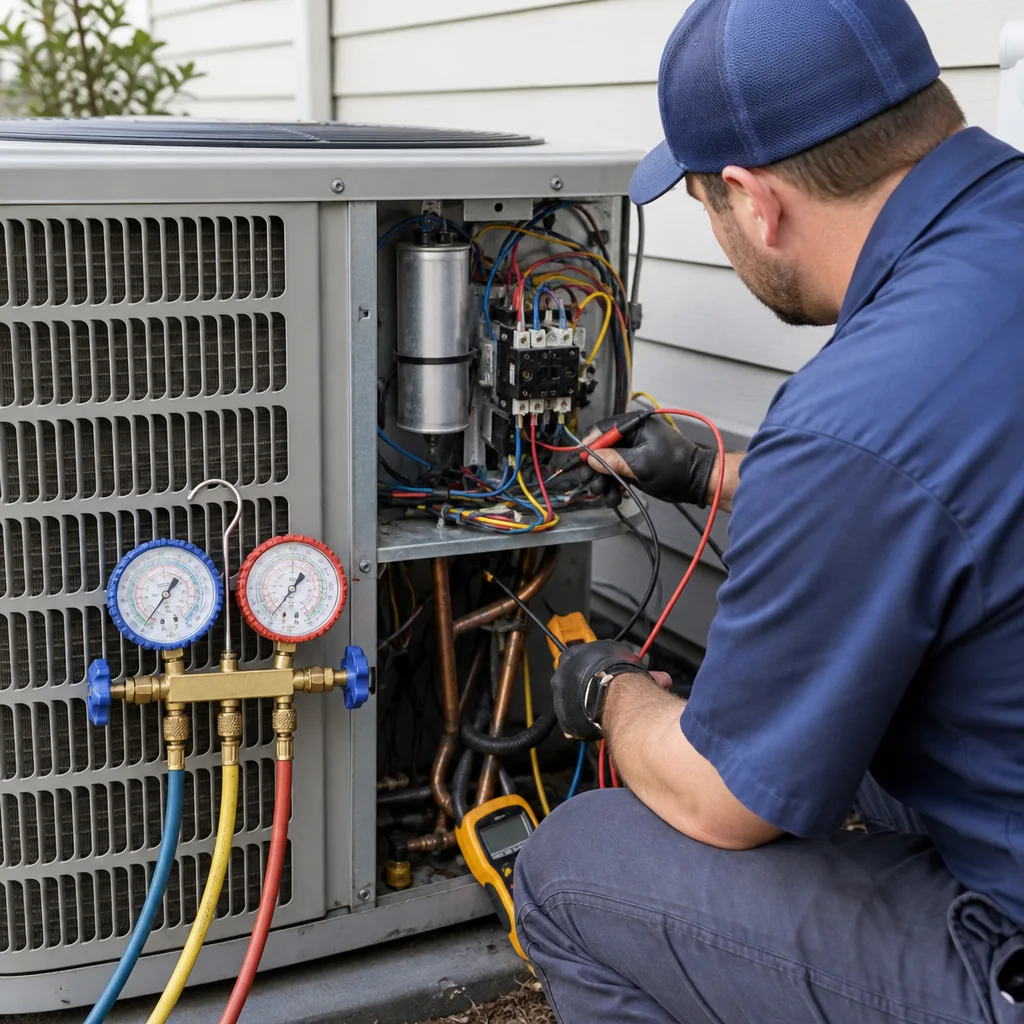 After
After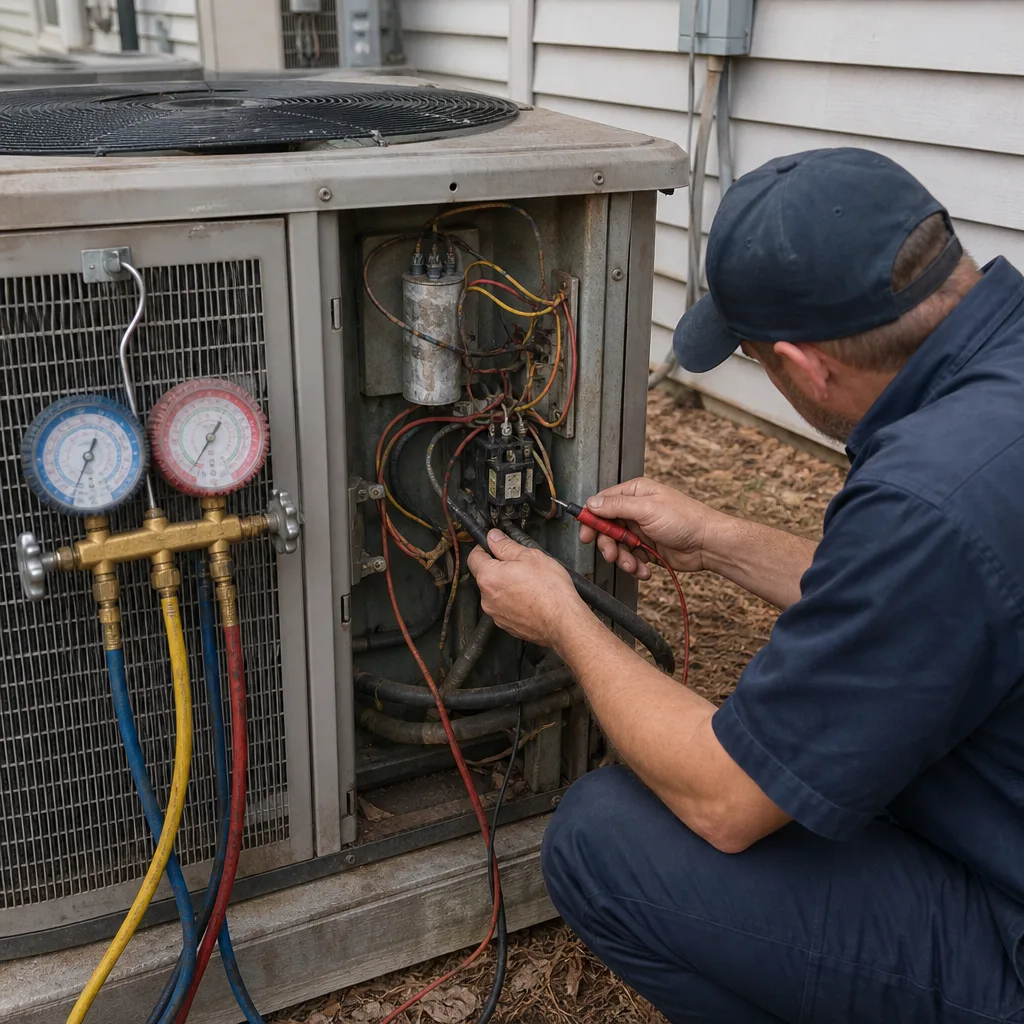 Before
 After
AfterReplacement Cost & What’s Included
In Alpharetta, a Goodman capacitor replacement with Meadowsweet Heating and Air Alpharetta lands between $150 and $350 installed. The range exists because Goodman’s lineup covers different capacitor sizes and configurations. A basic single-run fan capacitor on a smaller GSX13 runs toward the lower end. A dual-run capacitor on a larger GSX16 or heat pump lands toward the upper end. The part itself is modest, but the labor includes safe discharge of the existing capacitor, verification of the replacement’s microfarad rating against the condenser’s spec plate, mounting, terminal connections, and a full system start-up test.
What you get with that price: a written quote before any work starts, a capacitor matched to your Goodman unit’s exact µF and voltage rating, and our 365-Day Done Right Promise. If the capacitor fails or the start-up test reveals a related issue within the year, we’re back to make it right without a runaround.
We never charge overtime rates for evening or weekend capacitor calls in Alpharetta. A failed capacitor at 8 p.m. on a Saturday costs the same as one at 10 a.m. on a Tuesday. You’ll also get the standard Meadowsweet visit: shoe covers and drop cloths inside the house, a cleanup photo before we leave, and a technician who explains the exact readings we found before and after the swap.
DIY or Call Us?
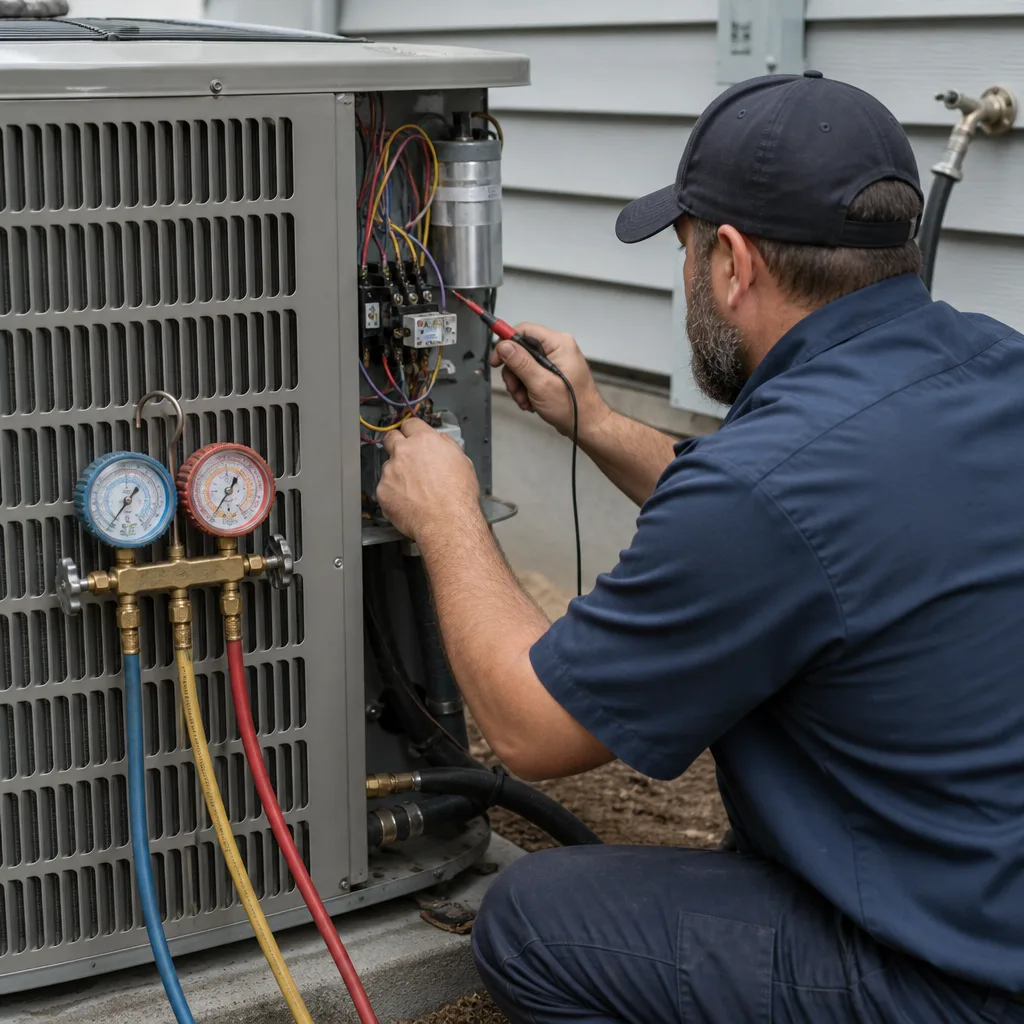
Here’s the honest split. You can inspect the capacitor safely from the outside: listen for humming, watch for the fan not spinning, and check whether the system starts and runs normally. What you should not do is open the condenser access panel with the power on, or even with the power off unless you know how to discharge a capacitor’s stored charge. A Goodman capacitor holds a high-voltage charge even after the breaker is thrown. Touching the wrong terminal is how a homeowner ends up in urgent care. This is not a job where a YouTube video and a multimeter make you safe. It’s a live electrical component, full stop.
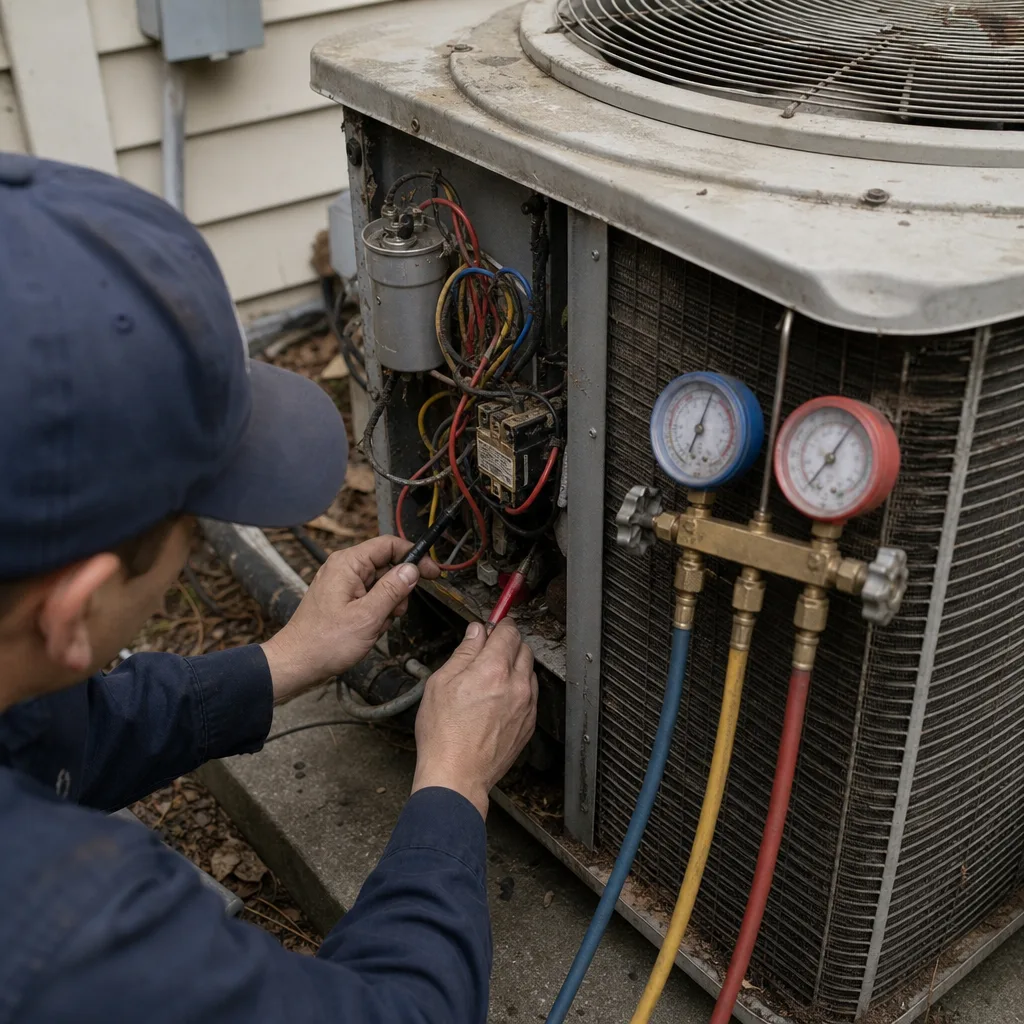
Luis Serrano grew up in Los Angeles, trained at LA Trade-Technical College, and has spent nearly two decades in HVAC. He’s seen what happens when a capacitor is installed backwards, mismatched, or with the wrong terminal spade. The test equipment we carry checks the reading before and after. The wiring gets a visual inspection for heat damage. The whole thing takes under an hour, and you’re back to a cool house. If you’re anywhere in Alpharetta, call (478) 606-5046 and we’ll give you a straight answer about whether it’s a capacitor or something upstream of it. As Luis says, “If I wouldn’t leave it that way in my own house, we’re not done yet.”
FAQs
A quality capacitor in a Goodman condenser in Alpharetta typically lasts 5 to 10 years. Georgia’s long cooling season and high humidity shorten that span compared to milder climates. If the system runs 2,000-plus hours a year, as many Alpharetta systems do, 5 to 7 years is a realistic expectation. We see premature failures most often in units where the capacitor was replaced with an off-spec or bargain part previously.
No. A capacitor is a sealed electrical component, and once it has swollen, leaked, or lost its rated microfarad capacity, there’s no repair path that restores it. The only correct fix is a replacement with the exact capacitance and voltage rating your Goodman unit specifies. Any attempt to “revive” a failed capacitor is a patch that fails again, usually during the hottest week of the year. For an exact quote on a Goodman capacitor replacement, call us at (478) 606-5046.
Most Goodman capacitor replacements take 30 to 60 minutes from arrival to a running, tested system. That includes shutting down power, discharging the old capacitor safely, removing it, installing the new one, checking the microfarad reading under load, and running the system through a full start-up cycle. In Alpharetta, we’re typically on site the same day you call.
Yes. Our trucks carry the most common Goodman capacitor ratings, including 35/5, 40/5, 45/5, and 50/5 µF dual-run units at 440 volts. We also carry single-run fan capacitors for the smaller Goodman models that use them. If your system needs a less common spec, our Alpharetta parts network can usually have it in hand within the same business day. Call (478) 606-5046 and we’ll confirm availability for your exact model before we head your way.
Written by Luis Serrano, Owner, Meadowsweet Heating and Air Alpharetta at Meadowsweet Heating and Air Alpharetta, serving Alpharetta and nearby areas.