
Last updated October 16, 2026
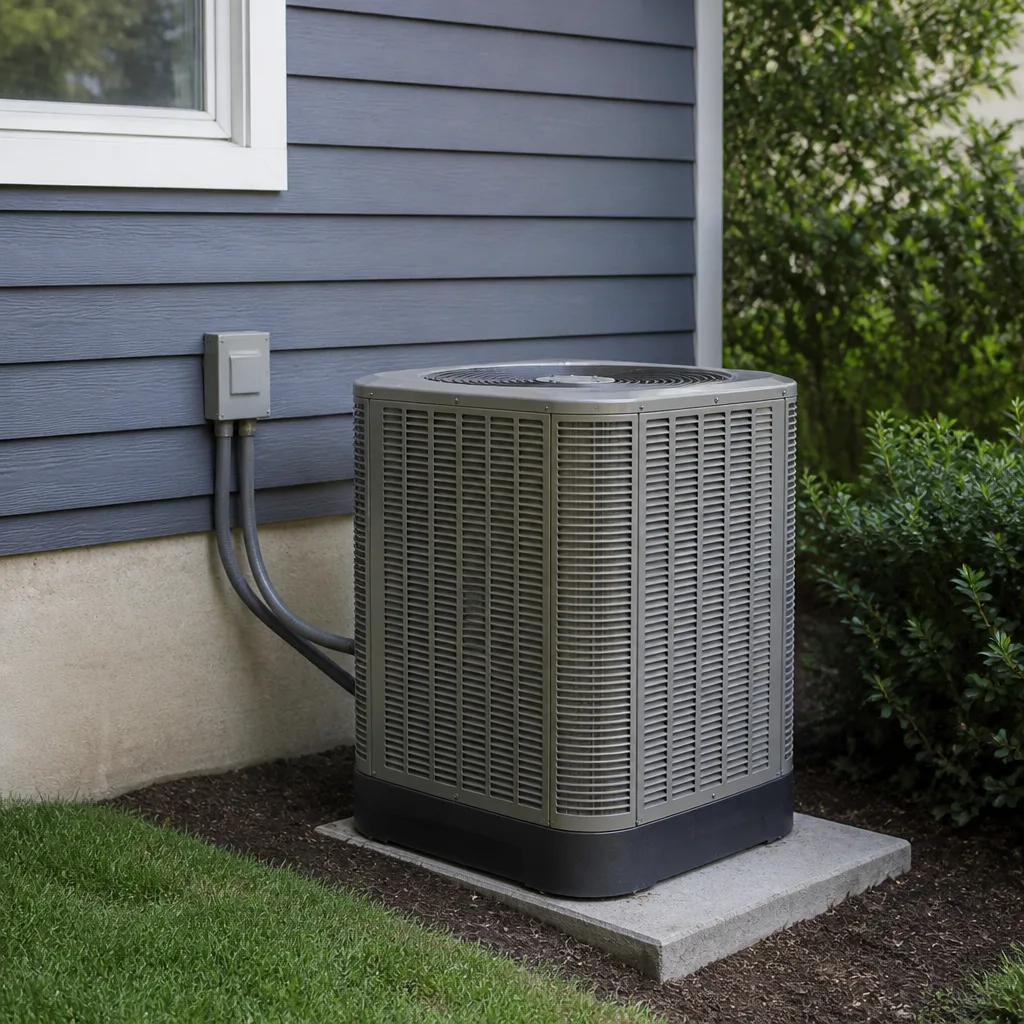 AC repair
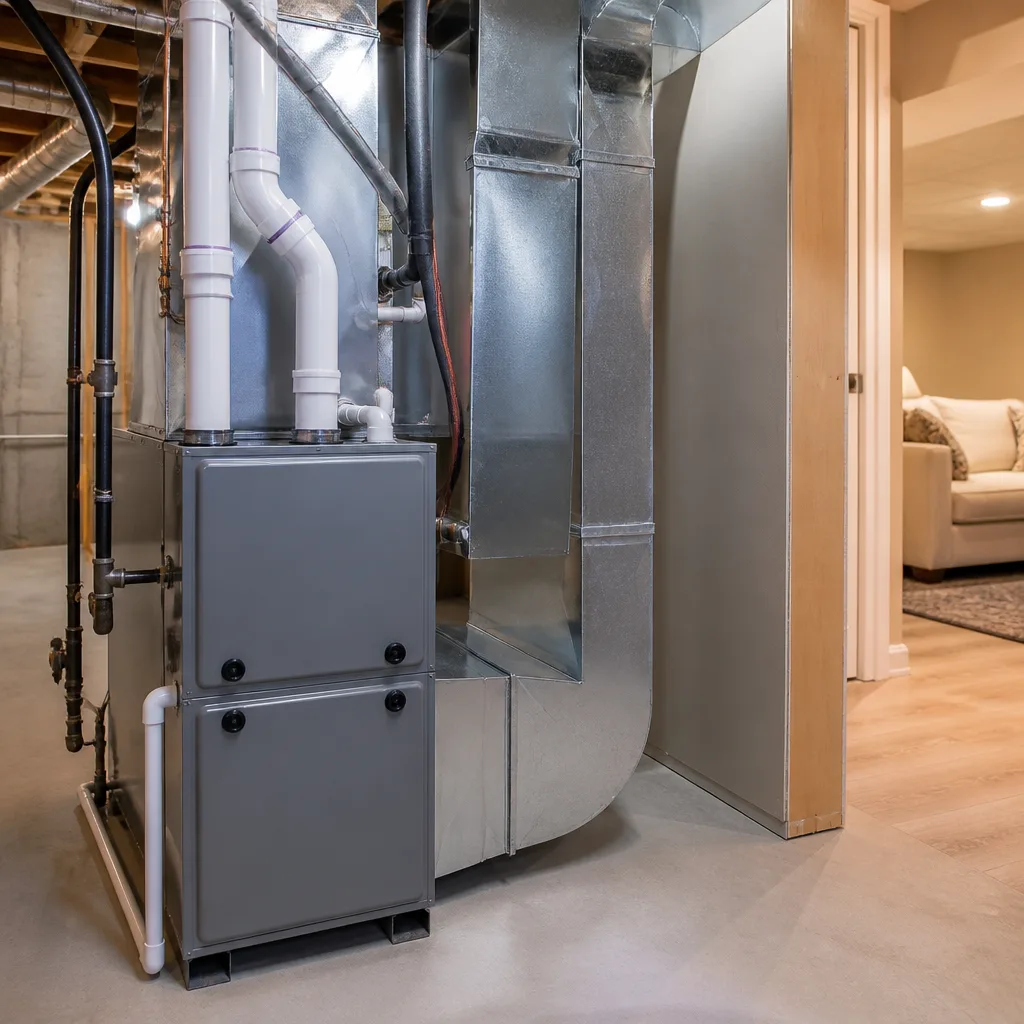 Furnace & heating
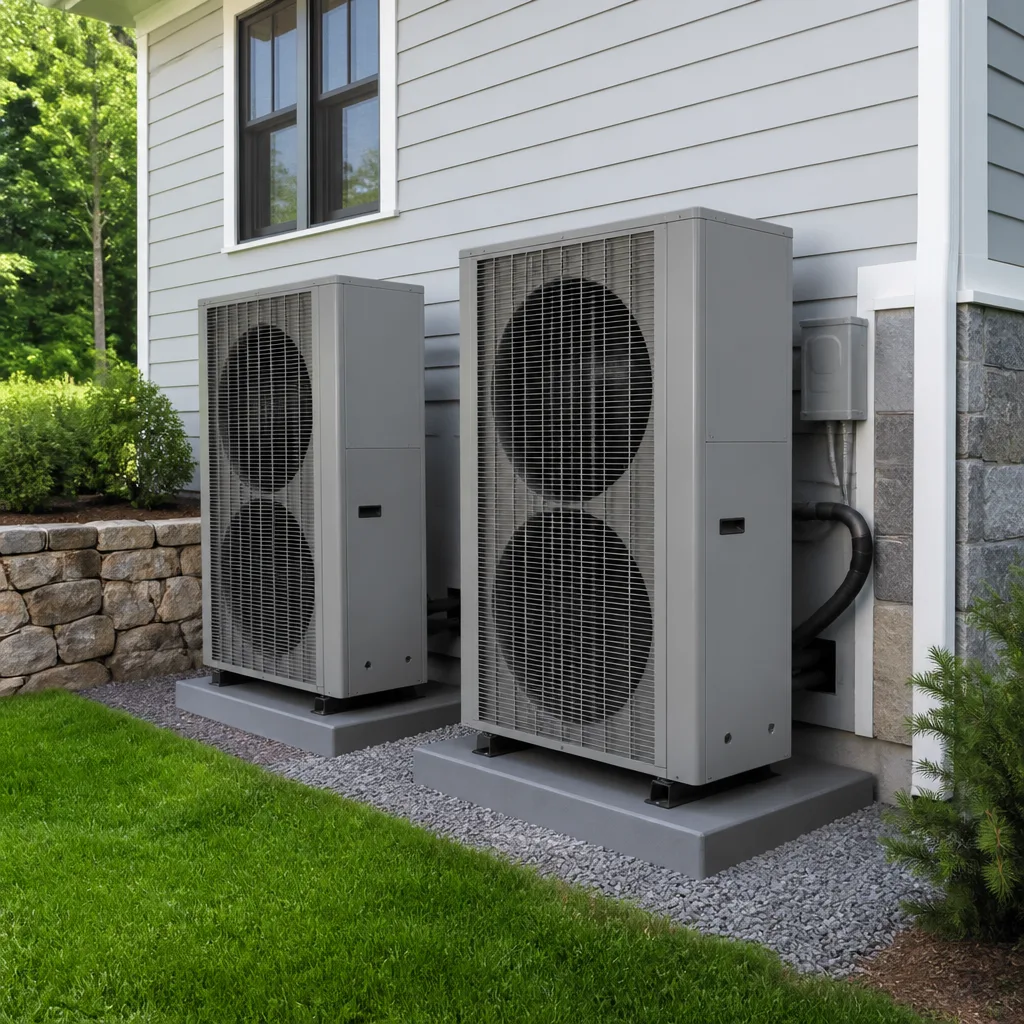 Heat pumps
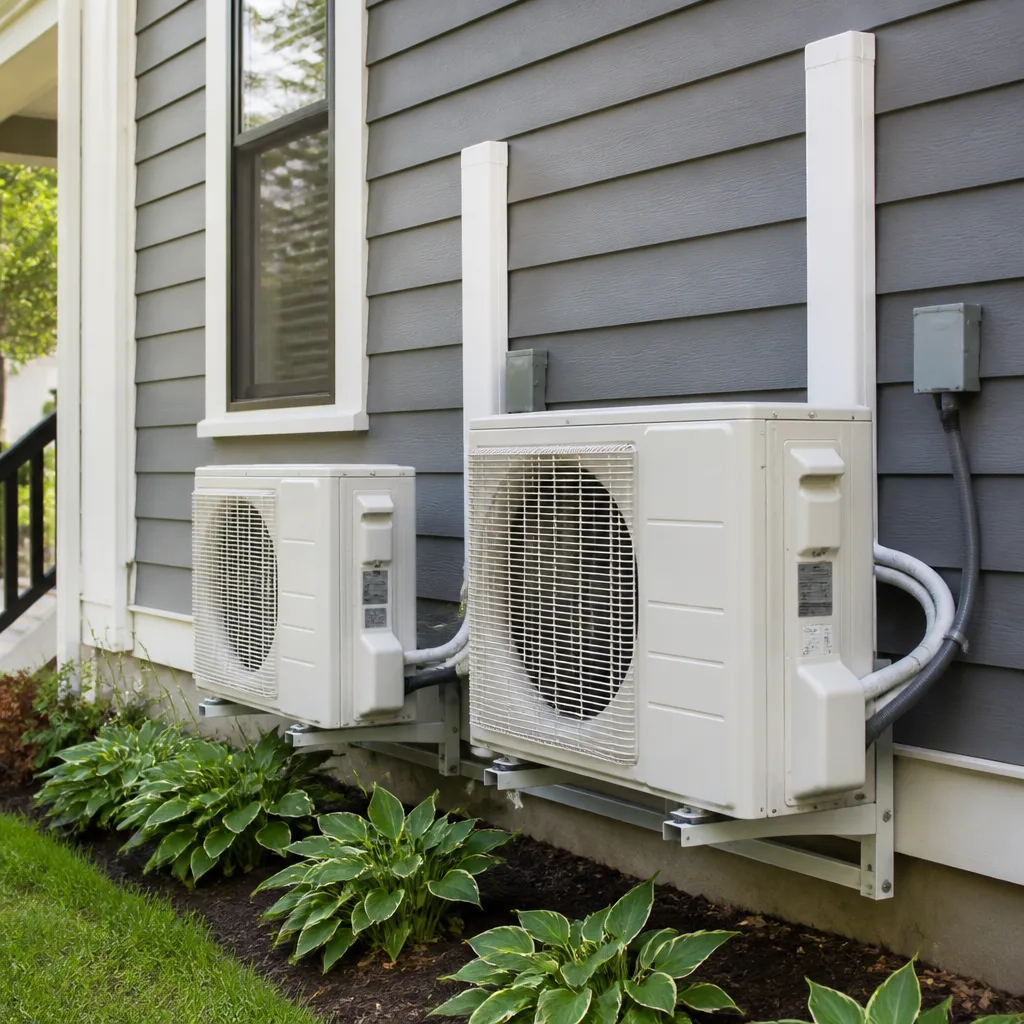 Ductless mini splits
 Carrier
 Trane
Trane Goodman
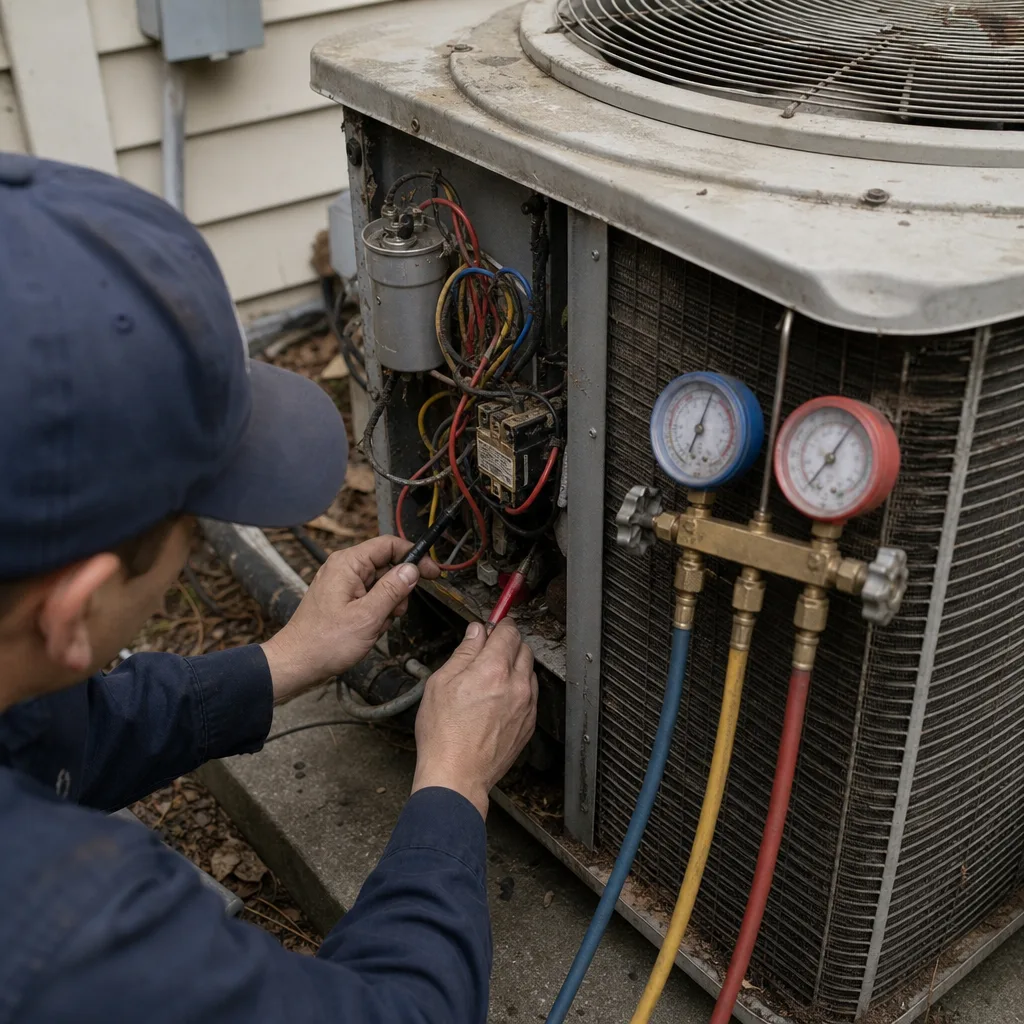
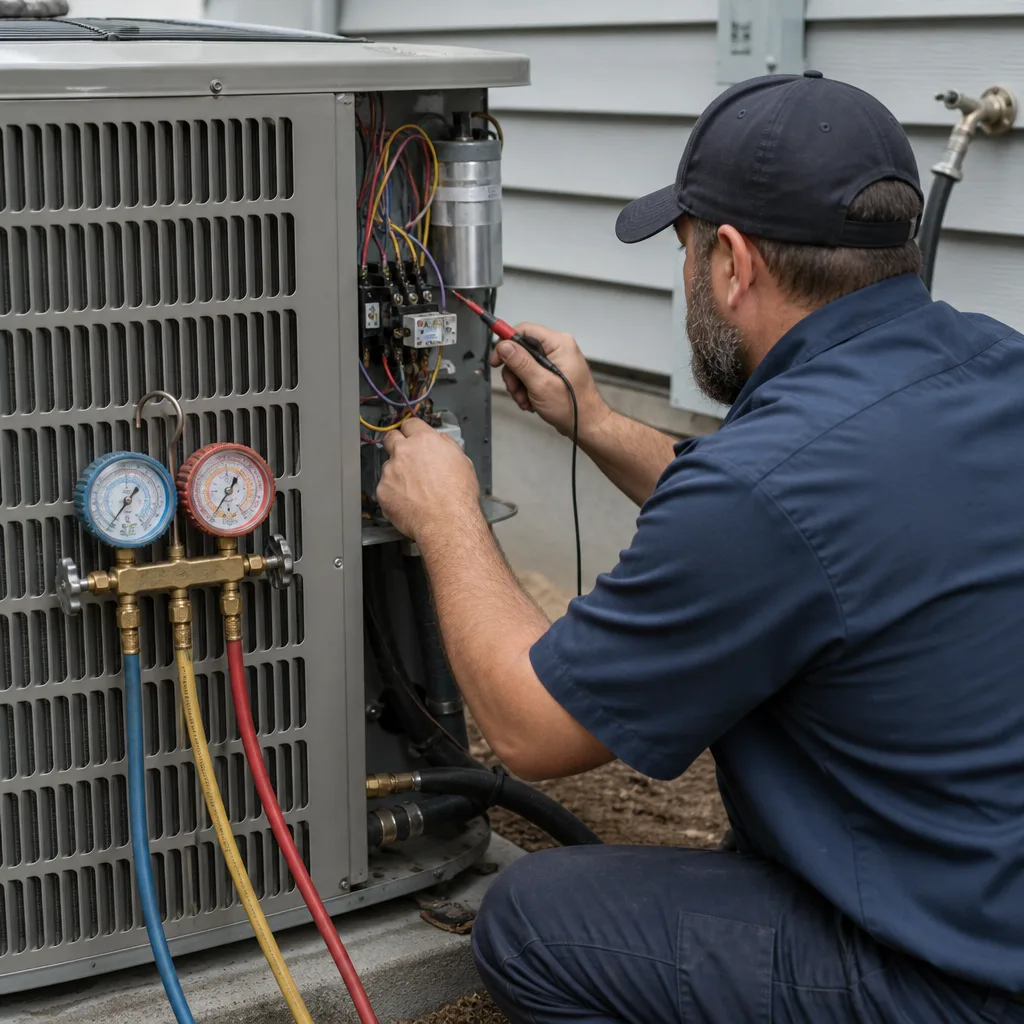
Seasonal tune-up and full diagnostic on your Carrier, Trane, or Goodman system - readings shown to you before any repair is proposed
Diagnosis first, numbers second - you approve the repair price before a single part goes in.
Get your free estimateHVAC Warning Signs: A Alpharetta Homeowner’s Reference Guide
Here’s something most Alpharetta homeowners don’t know: a sulfur smell near an indoor air handler is not a gas leak. It’s almost always a dead rodent in the ductwork or a drain pan biofilm, which is a $75 – $150 service call. Homeowners who don’t know this either panic-call an emergency line and pay after-hours rates, or ignore a real odor problem that degrades indoor air quality for months. This guide and our Complete Guide to HVAC in Alpharetta translate the seven warning signs we encounter most often into plain language, with specific mechanical causes, realistic cost ranges, and a clear call-today versus monitor-and-wait framework. You’ll finish knowing exactly what to photograph, what to note, and when to pick up the phone.
Quick Answer
HVAC warning signs in Alpharetta homes fall into three categories: sounds (clicking, banging, hissing), smells (musty, sulfur, burning), and performance issues (short cycling, uneven cooling, condensate overflow). Each sign points to a specific mechanical cause with a predictable cost range. Some require same-day attention; others can be monitored for a few weeks. The Alpharetta climate, with its high summer humidity, makes condensate overflow, evaporator coil freeze, and bio-growth odor three times more common here than in drier markets like Phoenix or Denver.
Styles & brands we work with
Table of Contents
- Sound Warning Signs: Clicking, Banging, Squealing, and Hissing
- Smell Warning Signs: Musty, Sulfur, and Burning Odors
- Performance Warning Signs: Short Cycling, Uneven Cooling, and Slow Airflow
- Three Warning Signs Alpharetta’s Humidity Makes Worse
- The Monitor vs. Call Now Decision Framework
- What to Photograph and Note Before Calling a Technician
- The Warning Signs That Turn a $300 Repair Into a $3,000 – $6,000 Replacement
- Common Mistakes to Avoid
- When to Call a Professional
- Frequently Asked Questions
Sound Warning Signs: Clicking, Banging, Squealing, and Hissing
Sounds are the loudest, most unambiguous warning signs your HVAC system gives you. They’re also the most frequently misdiagnosed by homeowners who Google “what does a clicking furnace mean” at 2 a.m. and get ten different answers. In our experience, each sound maps to a specific component. Here’s the breakdown:
- Clicking at startup: This usually means a failing capacitor or a relay that’s struggling to close. Expect a $150 – $300 repair, and don’t wait longer than a week because the capacitor is what starts the compressor. If it fails completely, your AC won’t start at all, and capacitor failures spike during Alpharetta’s July heat when systems run hard.
- Banging or thumping when the system kicks on: Often a loose blower wheel or a failing motor mount. Sometimes it’s a belt-driven blower (older units) with a slipping belt. Cost range: $200 – $450. Ignore this long enough and the wheel can crack, sending plastic shards through the ductwork.
- Squealing or screeching: A dry or failing blower motor bearing, or a slipping belt on older systems. This one is hard to miss. Repair is typically $180 – $350 for a bearing replacement, but if the motor has begun to seize, you’re looking at $500 – $900 for a new blower motor. The sooner you catch a squeal, the less likely you need the full motor replacement.
- Hissing: A hiss near the indoor coil during cooling season usually means refrigerant escaping from a pinhole leak in the evaporator coil. This is a call-today situation. Refrigerant is not a consumable; a system that’s hissing is a system that’s losing charge, and running a low-charge system can destroy the compressor. A leak search and repair runs $300 – $800 depending on where the leak is and how much refrigerant must be recovered, pulled to vacuum, and recharged.
One thing we tell Alpharetta homeowners: a sound that appears only during the first few minutes of operation is different from one that persists. A startup creak on a 12-year-old system may be harmless thermal expansion in the ductwork. A hiss that happens every cycle, all cycle, is not. Note when the sound happens, how long it lasts, and whether it changes with thermostat settings. That information on the phone with AC Repair in Alpharetta gets our technician to the right component faster.
Danger note: hissing from a gas furnace is a different situation entirely. If you hear hissing near a gas line or smell gas, leave the house and call your gas utility immediately. Do not flip switches, light matches, or use a phone inside. The hissing we’re describing above is refrigerant-side, which is a repair urgency, not a life-safety urgency. If you’re not sure which you’re hearing, treat it as a gas emergency until proven otherwise.
Smell Warning Signs: Musty, Sulfur, and Burning Odors
Smells are the warning signs that linger. Your nose detects biological and chemical problems long before your thermostat shows a temperature issue. Alpharetta’s humidity makes odor problems especially persistent because moisture feeds mold, algae, and bacterial growth inside drain pans and evaporator coils.
- Musty or dirty-sock smell when the AC runs: This is bio-growth. The evaporator coil stays wet all summer, and the dark, damp environment is exactly what algae and bacteria need. The smell gets pushed into the living space every time the blower runs. A coil cleaning and drain pan treatment runs $250 – $500. In Alpharetta, where summer dew points regularly sit above 70°F, this is one of the most common complaints we hear from late May through September. Homes near the Chattahoochee River and older subdivisions with mature tree canopies see it even more because ambient humidity around the condenser is higher.
- Sulfur or rotten-egg smell near the indoor air handler: As mentioned at the top of this guide, this is almost never a gas leak when it’s coming from the air handler itself. It’s typically a dead rodent inside the ductwork or return plenum, or a severely fouled drain pan. The fix is removing the source and sanitizing the affected area, about $75 – $150 for a service call if it’s a straightforward retrieval. If the animal died inside ductwork that requires cutting an access panel, the cost can rise to $250 – $400. Either way, don’t live with a dead-animal smell in your air supply. The odor compounds break down into gases you shouldn’t be breathing, and the moisture from decomposition feeds the bio-growth problem described above.
- Burning or hot-dust smell on the first heating cycle of the season: This is usually harmless. Dust settles on the heat exchanger during the cooling season, and when the furnace first ignites in October or November, it burns off. The smell should disappear within 30 – 60 minutes. If it persists beyond that, or if it has an acrid, electrical smell rather than a dusty smell, shut the system down and call. Persistent burning smells can indicate a failing blower motor or an overheating heat exchanger, which is a safety issue on a gas furnace.
Here’s the practical framing we give homeowners: a food smell in the kitchen tells you something specific about what’s cooking. An HVAC smell tells you something specific about what’s growing, burning, or dying inside your system. Treat smell as real diagnostic data, not an inconvenience. If your system smells off and you’re in Alpharetta, call Meadowsweet Heating and Air Alpharetta home at (478) 606-5046. A live person answers, 24/7, and can tell you over the phone whether the smell you’re describing matches a watch-it case or a call-today case.
Performance Warning Signs: Short Cycling, Uneven Cooling, and Slow Airflow
Performance problems are the quiet warning signs. They don’t smell, they don’t bang, they just quietly run up your power bill while your house gets less comfortable. Performance issues are also where Alpharetta homeowners waste the most money, because these signs can simmer for months before anyone calls.
- Short cycling: The system turns on, runs for 5 – 8 minutes, shuts off, and repeats. A properly sized system in Alpharetta’s summer heat should run for at least 15 – 20 minutes per cycle. Short cycling is typically caused by an oversized system (common in homes where a previous owner or builder cut corners), a refrigerant overcharge, or a failing thermostat. Each short cycle burns more electricity per minute of comfort delivered, and repeated starts wear the compressor. Diagnosis costs about $100 – $200; the fix depends on the cause.
- Uneven cooling between rooms: The thermostat room is comfortable, the upstairs bedroom feels like a sauna. This is usually an air distribution problem: closed or blocked supply registers, a return duct that’s too small for the system, or unbalanced dampers. Sometimes it’s a zoning issue on multi-story homes. A duct assessment and damper adjustment runs $250 – $500. In Alpharetta’s two-story Colonials and craftsman-style homes in the downtown historic district, this is one of the most common comfort complaints we address in the cooling season.
- Slow airflow from registers: If the air coming out is cold but weak, check the filter first. A clogged filter is a $15 fix that mimics a $600 blower motor problem. If the filter is clean and airflow is still weak, suspect a failing blower motor, collapsed duct, or an evaporator coil that’s so fouled it’s restricting air. Call before the restricted airflow causes the coil to freeze solid.
All three of these performance signs have one thing in common: they’re cheap to diagnose and increasingly expensive to ignore. A system short-cycling through a Georgia July is a system that may not survive to August. If you’re seeing performance signs, air conditioning repair is the page to bookmark.
Three Warning Signs Alpharetta’s Humidity Makes Worse
Not every HVAC warning sign is universal. Alpharetta sits in a humid subtropical climate zone. Summer dew points run 68 – 74°F from June through September. High dew points mean condensation, and condensation means water problems inside your HVAC system. Here are three signs we see disproportionately often in this market compared to what technicians report in Phoenix, Denver, or Las Vegas:
- Condensate overflow: Your system produces several gallons of condensation per day during humid weather. That water drains through a PVC line to the outside or into a floor drain. When the line clogs with algae or debris (which high humidity accelerates), the drain pan fills and overflows. Homeowners see water stains on the ceiling below an attic unit, or a puddle around an indoor closet unit. A clogged condensate line clearing is $150 – $300. The water damage from ignoring it can run into thousands. If you see standing water near an indoor unit, call today. This is the most common “small problem becomes a big problem” failure we see in Alpharetta specifically.
- Evaporator coil freeze: A frozen coil seems counterintuitive on a 95°F day, but Alpharetta’s humidity makes it common. When airflow is low (dirty filter, failing blower, or closed registers), the coil temperature drops below freezing and condensation turns to ice. The system then runs worse, airflow drops further, and the freeze worsens. We see this every summer in Alpharetta, and it’s the #1 cause of “my AC is running but not cooling” calls in July. The fix is often simple: thaw, clean, replace the filter, check the refrigerant charge. $200 – $400 if caught early. A compressor destroyed by a repeatedly frozen coil is a $2,500 – $4,000 repair.
- Bio-growth odor from the air handler: We covered the dirty-sock smell above, but it’s worth repeating with context: Alpharetta’s humidity loads water into the drain pan and coil 24/7. Homes that run their systems constantly through the summer see higher colonization rates. An annual coil cleaning is realistic maintenance in this climate, not optional. Homes near Big Creek, the Chattahoochee, or any of the city’s many lakeside and creekside neighborhoods see it more.
These three signs share a root cause: moisture. Managing moisture is the single most impactful thing an Alpharetta homeowner can do to extend equipment life. That means keeping the condensate drain line clear, changing filters on schedule, and having the coil checked before each cooling season. If you’re not sure about your system’s moisture behavior, AC Installation in Alpharetta is a good resource when a system reaches the point where replacement is more sensible than repeated repair.
The Monitor vs. Call Now Decision Framework
Not every warning sign requires a service call today. Some require one this week. Others can be watched for a few weeks while you budget. Here’s the framework we use with our own families and with homeowners across Alpharetta:
Call today (same-day or next-day urgency):
- Hissing near the indoor coil during cooling season (refrigerant leak risk to compressor)
- Burning smell that persists beyond the first heating cycle dust burn-off
- Water pooling around an indoor unit or water stains on ceilings below an attic handler
- An AC that runs but blows warm air on a day above 85°F (potential compressor failure or total refrigerant loss)
- Any gas smell near a furnace (call gas utility first, then HVAC)
Call this week (schedule at your convenience, don’t wait a month):
- Squealing or screeching blower motor (gets more expensive every week it runs)
- Short cycling that’s consistent across every cycle (compressor wear accumulates)
- Musty or dirty-sock odor every time the AC runs (bio-growth spreads)
- Uneven cooling between floors with a difference of 5°F or more persisting all day
Monitor for now (note it, keep an eye on it, mention at the next tune-up):
- Clicking that occurs only at startup and only occasionally
- Slightly reduced airflow that resolves after a filter change
- Hot-dust smell on the very first heating cycle in the fall (if it clears within an hour)
- Energy bills 10 – 15% higher than the same month last year with no obvious cause (start with filter and thermostat settings)
The framework works because it respects two truths. First, emergency service calls cost more than scheduled calls. Calling today for a problem that didn’t need today’s attention wastes money. Second, some failures are time-sensitive in a way that compounds daily. A refrigerant leak ignored for three weeks can destroy a compressor; a refrigerant leak addressed within 48 hours is usually a coil repair and a recharge.
What to Photograph and Note Before Calling a Technician
One of the most useful things a homeowner can do happens before the technician arrives. Good documentation shortens diagnosis time, which means less billable diagnostic time and a faster path to a written price. Here’s the list we recommend, in order:
- Photograph the data plate on your outdoor unit. The model number and serial number tell us the equipment’s age, refrigerant type, and design specifications. In Alpharetta, where many homes have systems installed between 1997 and 2015, knowing the refrigerant type (R-22 vs. R-410A) immediately tells us whether a leak repair is a straightforward recharge or a system-replacement conversation. R-22 is no longer produced in the U.S., and its remaining stock carries prices that make leak repair on R-22 systems a false economy in many cases.
- Note when the warning sign started. Was it last week, last month, or the first time you noticed it three months ago? A problem that started in March and is still present in July tells a different story than one that began Tuesday. Write down the approximate date or at least the month.
- Note which rooms are affected. If cooling is uneven, which rooms run warm? Upstairs, downstairs, west-facing rooms in the afternoon, all of them? Room-specific information narrows the diagnosis from “air distribution problem” to “south-side duct run is undersized for solar gain.” In Alpharetta’s summer climate, west-facing rooms take hours of direct afternoon sun and need more cooling capacity per square foot.
- Note the thermostat reading and the actual room temperature. If the thermostat says 72°F but a bedroom reads 78°F on a standalone thermometer, that’s a sensor or distribution issue, not a system capacity issue.
- Check the filter and note its condition. Take a photo if it’s visibly dirty. The filter condition is the first thing any technician will ask about, and handing over this information on the phone gets us to the real diagnosis faster.
- Know your system’s maintenance history. Has it been serviced in the last two years? When was the last filter change? Has anyone added refrigerant before? If a previous company topped off refrigerant without finding the leak, that’s important. Refrigerant doesn’t get used up; a low charge always means a leak somewhere.
Documentation does something else too: it protects you from unnecessary upsells. When a technician (from any company) arrives and you can say “the data plate shows this is a 2014 American Standard unit, the problem started in mid-June, the upstairs guest room is 6°F warmer, and here’s a photo of the filter I changed two months ago,” the diagnostic conversation starts at the halfway point. That’s less time on the clock and less room for guesswork.
The Warning Signs That Turn a $300 Repair Into a $3,000 – $6,000 Replacement
Here’s the hard truth about deferred maintenance: some warning signs are cheap to address and ruinously expensive to ignore. These are the ones where the cost of ignoring the sign for one full cooling season crosses the threshold from repair to replacement:
- A hissing refrigerant leak ignored through one summer. The leak itself is a $300 – $800 coil repair. Run the system low on refrigerant through an entire Georgia cooling season and the compressor runs hot, lubricant breaks down, and the compressor windings burn out. A compressor replacement on a 2012 Carrier unit runs $2,500 – $4,000 installed. On a system over 12 years old, the sensible path is often full system replacement at $6,000 – $12,000 depending on size, efficiency, and brand.
- A clogged condensate line ignored through one season. The clearing is $150 – $300. The water damage from repeated overflows can ruin drywall, flooring, and, if it’s an attic unit, the ceiling joists below. Insurance claims, remediation, and rebuilds run $3,000 – $10,000, and many Alpharetta homeowners discover their insurance policy has exclusions for slow leaks and maintenance-related failures.
- A short-cycling system ignored through one summer. Repeated compressor starts are hard on the motor and the start capacitor. What starts as a $200 capacitor replacement becomes a $900 circuit board, and if the compressor gives out, the $5,000 replacement conversation starts. On Bryant and Daikin systems more than ten years old, we often tell homeowners that the repair-cost-to-replacement-value ratio makes replacement the responsible choice.
- A frozen evaporator coil “fixed” by raising the thermostat. The ice thaws, the system runs again, and the homeowner thinks the problem passed. It didn’t. The underlying airflow or refrigerant issue remains, and each freeze-thaw cycle stresses the compressor. This is the pattern that produces the July week-ahead service backlog at every HVAC company in Alpharetta.
The pattern across all four: the initial problem was under $500 to fix. The deferred version is $3,000 to $10,000. If you’re trying to decide whether a warning sign is worth a service call, ask yourself one question: what does the worst-case version of this problem cost if I ignore it for six more months? When that number is four or five figures, the service call is the cheap option.
Common Mistakes to Avoid
- Ignoring a sound because “it always did that.” Systems don’t have speech. Sounds that persist and then stop often don’t mean the problem went away; they mean the component stopped functioning. A squeal that stops may be a bearing that seized. Check it.
- Google-diagnosing a refrigerant hiss as a gas leak and panicking, or dismissing it entirely. As described at the top of this guide, the sulfur smell near an air handler is almost never a gas leak, and a refrigerant hiss is almost never nothing. Match the symptom to the correct cause.
- Replacing the filter and thinking the job is done. A dirty filter causes many problems, but it’s rarely the only problem. The filter change is step one, not a repair.
- Topping off refrigerant without finding the leak. Some companies still offer this. Refrigerant is not consumed. If a technician adds refrigerant without performing a leak search, they’ve charged you for a temporary fix that will need to be repeated, and they’ve booted the real problem down the road where it will be more expensive.
- Not knowing your system’s age. The data plate is on the outdoor unit. Knowing the age determines warranty coverage, refrigerant type, and whether a repair is economically rational. This is the single easiest piece of information to have ready, and most homeowners don’t.
- Assuming your insurance covers maintenance-related water damage. Many policies exclude damage from gradual leaks, neglect, or failures that result from poor maintenance. In Alpharetta’s humid climate, condensate overflow is common enough that insurance companies have written exclusion language specifically addressing it. Check your policy before you assume.
- Waiting until after a sign becomes a failure to research an HVAC company. The middle of a July heat wave, when your compressor has failed and the indoor temperature is 89°F, is the worst time to make a decision about who works on your home’s equipment. Ask your neighbors in Alpharetta which company they use, check reviews, and have a name ready before you need the emergency service. The homeowners who do this pay less and get better outcomes.
When to Call a Professional
Call when the warning sign matches any of the call-today categories above: refrigerant hiss, persistent burning smell, water pooling around the unit, warm air on a hot day, or any gas odor. Call this week for a squealing blower, consistent short cycling, a musty odor that never clears, or uneven cooling with a 5°F or larger gap between floors. Call before the summer rush if you haven’t had maintenance done in two years or more, because Alpharetta’s cooling season doesn’t wait for anyone’s schedule-see our Seasonal HVAC Care for Alpharetta: Year-Round Homeowner’s Guide for timing. A preventive tune-up catches condenser fan problems, refrigerant leaks, and capacitor wear before they become Thursday-afternoon emergencies.
We answer AC repair in Alpharetta calls at (478) 606-5046, 24/7, with a live person every time. You call, a person answers, and we get a technician out to look at what you’re describing. There’s no voicemail queue and no callback roulette. Every visit starts with a written price before any work starts, so you’ll know exactly what the diagnosis and repair will cost before you commit. That’s how we work in Alpharetta, and it’s how we’ve worked since 2004.
Frequently Asked Questions
Musty AC smells in Alpharetta are almost always bio-growth: algae, mold, or bacteria colonizing the wet evaporator coil and drain pan. Our high-humidity summers feed this growth all season. A coil cleaning and drain pan treatment, typically $250 – $500, resolves it for most homes. If the smell persists after cleaning, the ductwork itself may need inspection.
A refrigerant leak repair in Alpharetta typically costs $300 – $800, including the leak search, repair, vacuum, and recharge. The exact cost depends on the leak’s location and the refrigerant type. Systems using R-22 refrigerant (typically manufactured before 2010) cost more to recharge because R-22 is no longer produced in the U.S. and existing stock is expensive.
Banging sounds are usually repairable: loose blower wheels, failing motor mounts, or slipping belts cost $200 – $450 to fix. Replacement becomes the better path when the system is over 12 years old, uses R-22 refrigerant, and has accumulated multiple repairs in the last two seasons. The math should weigh repair cost, system age, and likely near-term failures.
Yes. A failing capacitor can cause short cycling because it can’t deliver enough starting torque to keep the compressor running. Capacitor replacement runs $150 – $300 and is one of the most common repairs we perform in Alpharetta during the summer. If home AC repair is needed in Alpharetta, the capacitor is one of the first things our technicians check, as noted in our AC Repair Maintenance Checklist for Alpharetta Homeowners.
Heat rises, and Alpharetta’s two-story homes put the thermostat on the first floor while the upstairs bedrooms get direct afternoon sun. The result is a 5 – 10°F stack effect between floors. The fix is usually a duct balancing assessment and damper adjustment ($250 – $500), though some homes need a zoning system to truly equalize temperatures.
Look for water pooling around an indoor unit, water stains on the ceiling below an attic handler, or no water dripping from the outdoor drain line on a humid day when the system is running. A clogged condensate line clearing costs $150 – $300 in Alpharetta. If you see any of these signs, don’t wait, water damage from an overflowing pan gets expensive quickly.
The Bottom Line
HVAC warning signs are not mysterious. They’re mechanical messages with specific causes, predictable costs, and clear urgency levels. A clicking capacitor is not a hidden disaster; it’s a $150 – $300 repair if caught early and a compressor replacement if ignored long enough. A musty smell is not “normal for an old house”; it’s bio-growth feeding on Alpharetta’s summer humidity, and it’s treatable. A refrigerant hiss is never nothing, and a sulfur smell near an air handler is rarely a gas leak. The homeowners who do best in this climate are the ones who treat warning signs as information: they document what they see, they know their system’s age, and they call early enough that the cheap fix is still on the table. For more guides & resources, visit our blog. If you’re in Alpharetta and something on this page matches what you’re hearing, smelling, or seeing, call (478) 606-5046. We’ll send a technician who explains the price before the work, wears shoe covers inside your home, and leaves a clean-up photo before the crew pulls out of the driveway.
Written by Luis Serrano, Owner at Meadowsweet Heating and Air Alpharetta, serving Alpharetta since 2004.
See the difference
 Before
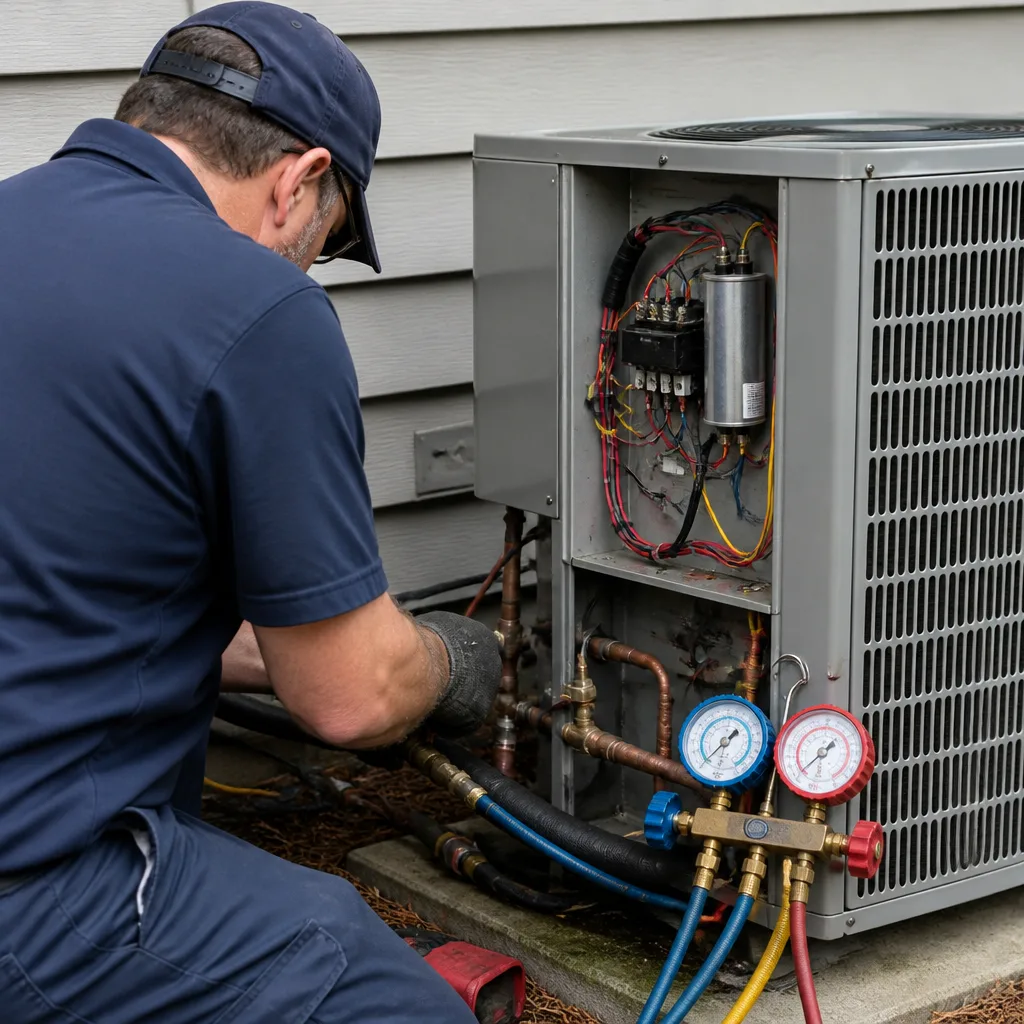 After
After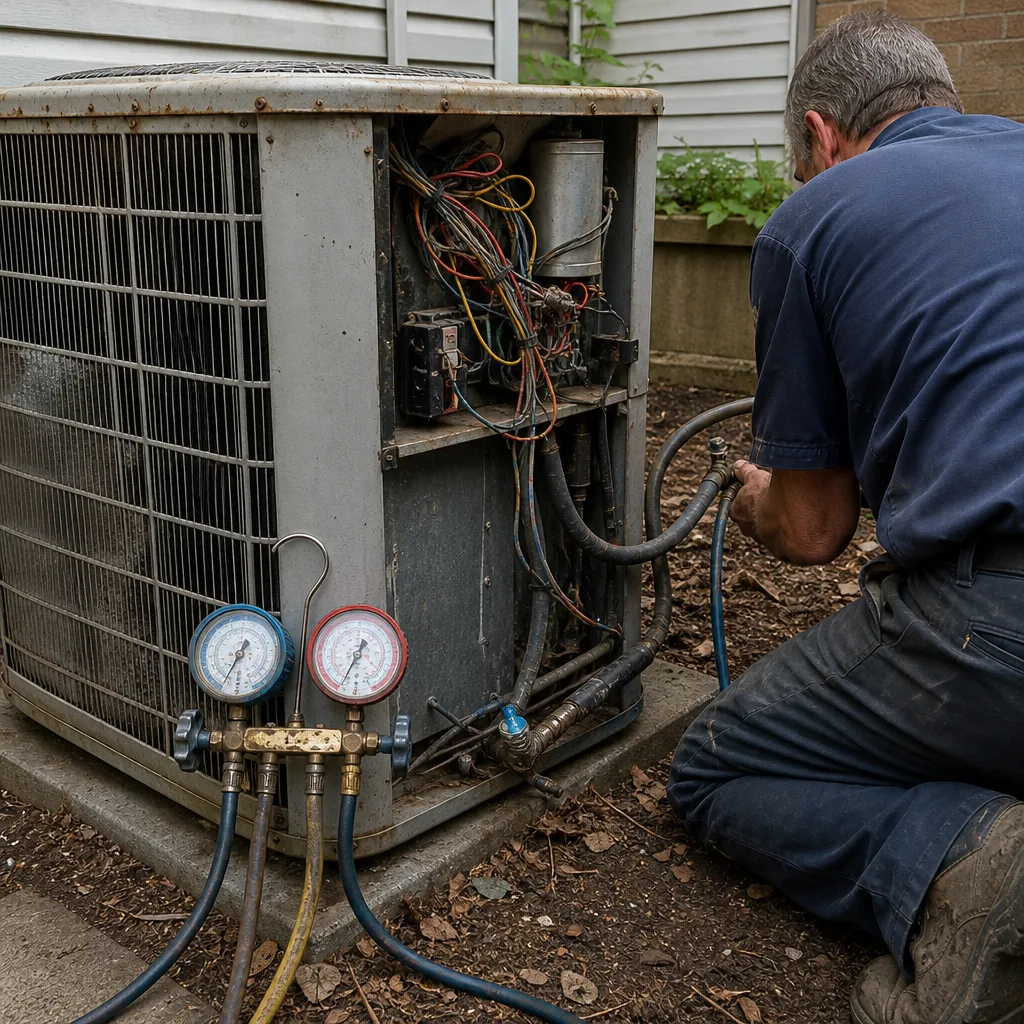 Before
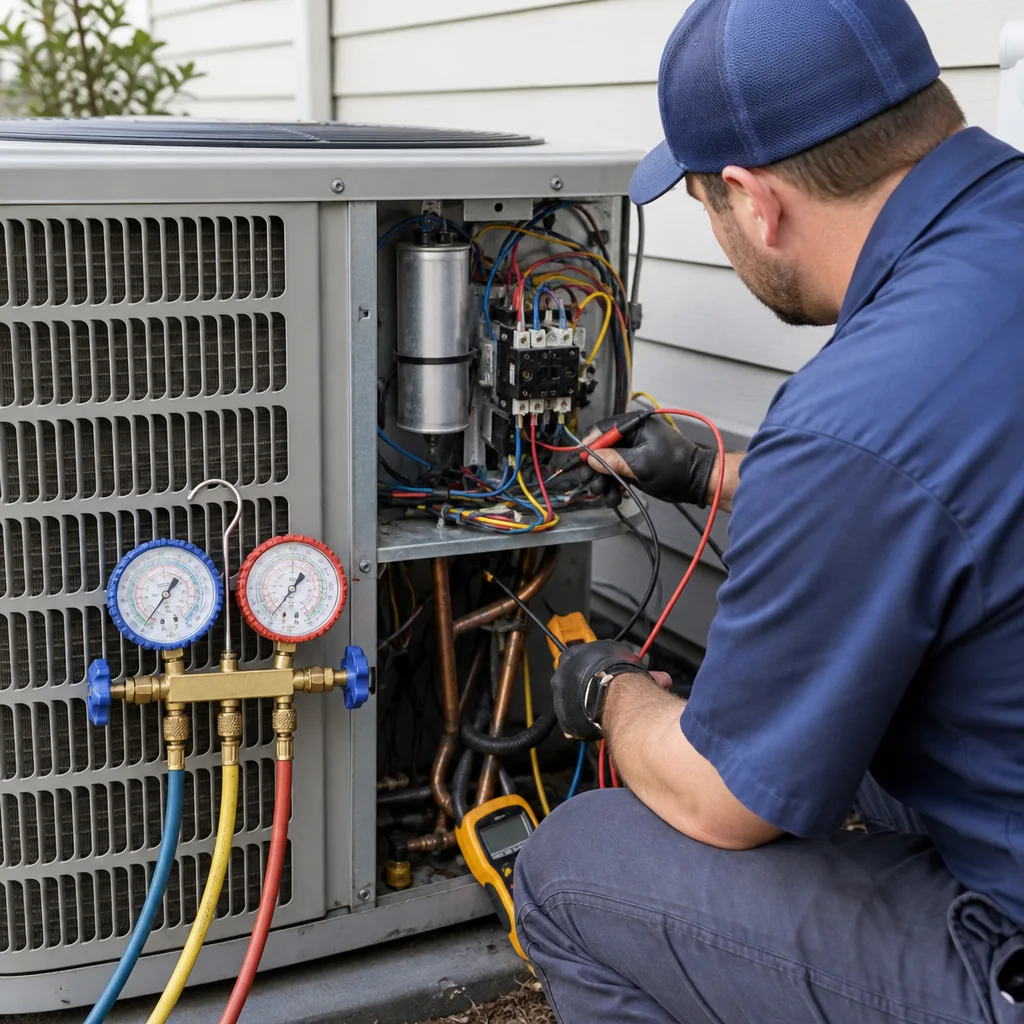 After
After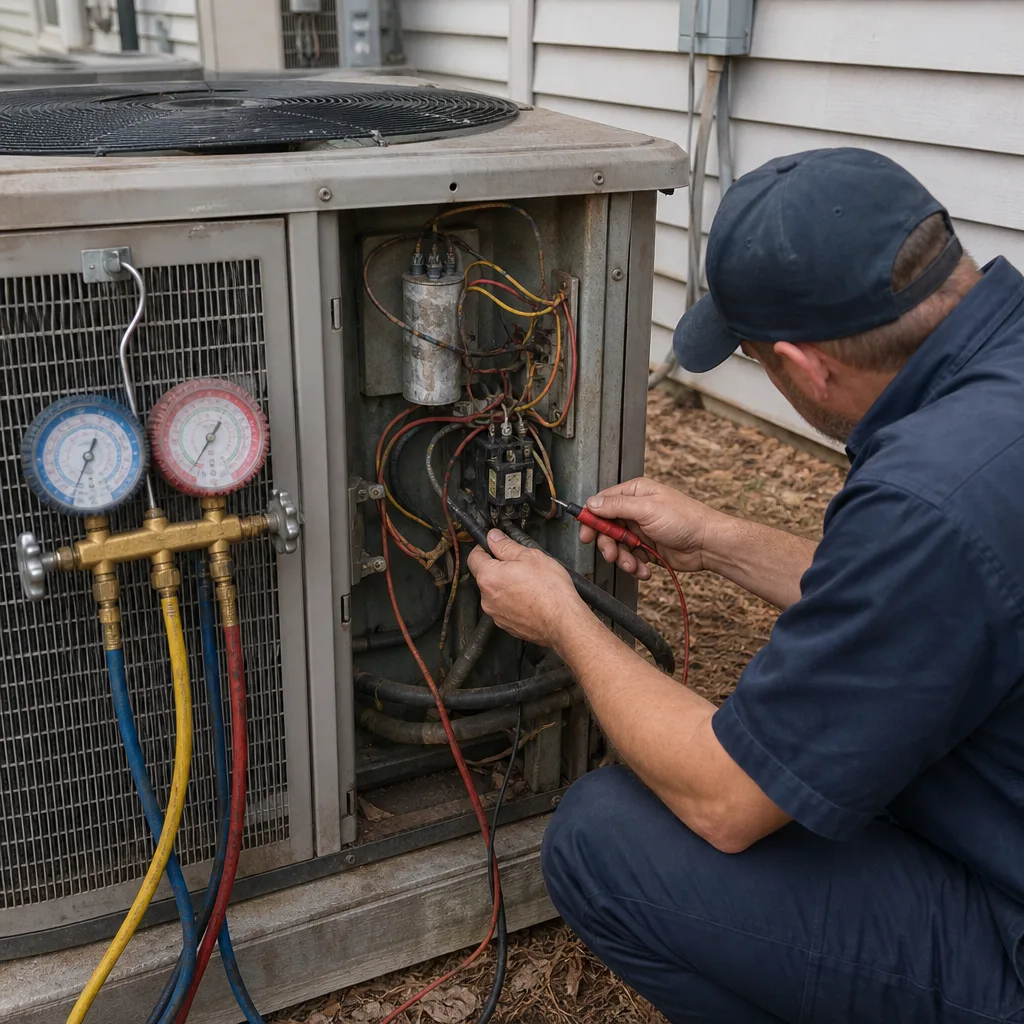 Before
 After
After